Last Updated on August 12, 2026 by Ivana Poku
So, Brooklyn Beckham recently posted something on Instagram that got everyone talking — and not just about him.
And before you groan and think, “Ugh, not another celebrity drama,” stick with me.
Because this isn’t really about fame or headlines.
It’s about something much deeper — something that happens in families all the time, even when nobody talks about it.
It’s about parents getting too involved in their grown kids’ lives.
The reason this story has caught so much attention isn’t just because the Beckhams are famous (though, let’s be honest, that helps).
It’s because so many people instantly recognised the pattern: tension, control, emotional pressure, and blurred boundaries.
What started as a “Brooklyn drama” quickly became a mirror for many of us. People began talking about their own parents, their own marriages, their own struggles — their own family “dramas.”
And that’s why this conversation matters.
It makes us ask the big questions:
When does being helpful cross the line into controlling behaviour?
And even more importantly…
What happens when parents just can’t let go?
Parenting Adult Children: Why Permanent Control Doesn’t Work
We don’t really talk about this enough.
Raising kids isn’t about keeping them close forever — at least not physically.
But here’s the thing: once kids grow up, some parents still act like, “Well… I’m still in charge, right?”
Not really.
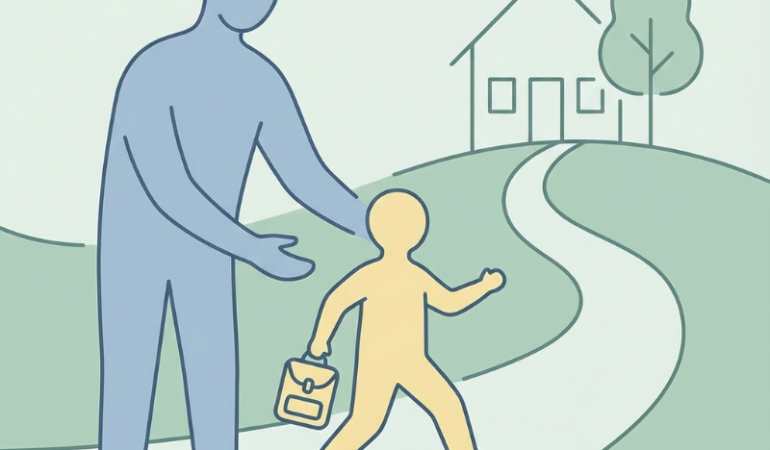
When kids become adults, the role changes completely. You’re not the boss anymore. You’re the cheerleader on the sidelines. The safe place. The person they go to if they want advice.
And yeah, letting go is hard. I get it. Really hard. Especially if your kid was your whole world, or if the house suddenly feels way too quiet.
But holding on too tightly? It doesn’t keep them close. Usually, it does the opposite.
Here’s the truth: love shouldn’t feel like pressure. It should feel freeing, uplifting, and safe.
When parents struggle to loosen the reins, it’s usually not about the kid at all.
It’s about fear. Fear of being replaced. Fear of feeling “less important.” Fear of not being needed.
But needing you less doesn’t mean they love you less.
It just means they’re growing up — which, honestly, is exactly what we wanted them to do in the first place.
Raising Independent Kids: The True Measure of Parenting
Raising kids isn’t about keeping them close forever (I mean physically, obviously!).
It’s about getting them ready to live without us.
That might sound scary at first, but actually? It’s kind of freeing.
Because think about the alternative.
Imagine if your kids couldn’t handle life on their own. Couldn’t make decisions. Couldn’t stand on their own two feet.
Every parent knows we won’t be around forever.
So the really scary thought isn’t leaving them — it’s that they might always need us.
I really got this a few years ago when my husband lost his dad. He’d already lost his mum in his early twenties, and just a few days before his dad passed, he said something that has stayed with me.
He said he could leave this world in peace because his youngest son — my husband — had found a partner who loved him and had built a happy, independent life.
And that’s the kind of peace I want one day too, as a mum.
To know my kids are okay, and that they will be okay — even without me.
It doesn’t mean they won’t miss me.
It means they can live.
And honestly? That should be every parent’s goal.
If it isn’t… well, something’s not right.
Related posts:
- Parenting Older Kids: Why I’m More Tired Now Than When They Were Babies
- How I Became More Patient With My Children (Without Meditation Or Yoga)
- Are Your Parenting Mistakes Really Hurting Your Kids? Let’s Get Real.
When Parents Can’t Let Go: My Personal Experience
I’ve been on the receiving end of this kind of parental interference, and honestly? I wouldn’t wish it on anyone.
My ex-husband was an only child, and his mum didn’t have a partner. Her whole world was about him. So when he got married, she really struggled with it.
I don’t think she hated me personally. She just didn’t like that, in her eyes, I had “taken her son away.”
Right from the start, she criticised almost everything I did. How I cleaned the house. How I hoovered. How I cooked. Even how I washed his clothes. It felt like she was always watching, judging, correcting… and nothing I did was ever good enough.
One time, my husband and I went away for ten days. When we came back, our whole house had been completely reorganised. Cupboards, wardrobes… even my underwear was folded neatly into piles.
It freaked the hell out of me!
It wasn’t long before I started having anxiety attacks. I did everything I could to make the marriage work, but in the end, it didn’t survive.
Looking back, I can see now just how important it is for parents to stay in their lane. Advice is fine. Control is not.
We raise our kids, teach them, guide them… and then we have to trust them to fly. To make mistakes. To learn. To live their own lives.
Once children are grown, it’s not our job to dictate their choices. We can offer advice gently — sure — but their life is theirs.
That’s why I’ve always believed in teaching independence from a young age. When kids learn to make decisions and stand on their own two feet, it doesn’t just build confidence. It helps their future relationships too.
Why Supporting Independence Matters in Parenting
Adult kids shouldn’t have to pick between their parents and their partner.
Everyone deserves to live their own life without feeling guilty, pressured, or controlled — especially by the people who are supposed to love them most.
We raise our kids, teach them, and hope they grow up confident and able to handle life.
And then, once they’re grown, we have to let them do their thing.
Let them make mistakes. Let them figure stuff out. Let them thrive, even if we can’t always be there to help.
Because here’s the thing: letting them be independent doesn’t mean we’re rejecting them.
It means we love them enough to let them fly.
See also:
- How I Finally Stopped Feeling Sad About My Kids Growing Up Too Fast
- Are Your Parenting Mistakes Really Hurting Your Kids? Let’s Get Real.
- Kids and Screens: It’s Not the Mums, It’s the Missing Village

PhDr. Ivana Poku is the author of Motherhood – The Unspoken, an award-winning blogger and maternal mental health advocate. Through her work, she is on a mission to create a world where mums feel seen, heard and supported. Ivana is also a mum of three boys, including twins, and lives with her family in a small coastal town in Scotland.