
Last Updated on October 12, 2026 by Ivana Poku
Is your house a mess?
You’re a new mum, it probably is.
And there is nothing wrong with that. (Well, kind of – but more on that in a minute.)
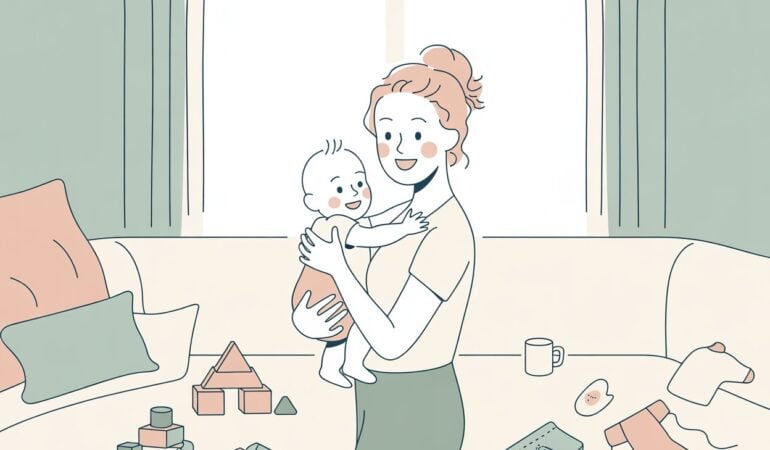
Your house is full of half-drunk cups of coffee… baby clothes thrown on the sofa… toys and more clothes all over the floor…
It’s not just the mess, it’s how it makes you feel.
Overwhelmed and snappy. (Often even without realising it.)
Like you’re constantly behind, no matter how much you do.
So no, having mess is not a bad thing. But if it impacts how you feel, that’s when it can become a problem.
Because your feelings matter – and they impact so much more than you realise.
That’s why I’m so excited about today’s post.
I speak with Hazel, the founder of Tidy Home and Mind, a psychotherapist and decluttering expert trained in the KonMari Method.
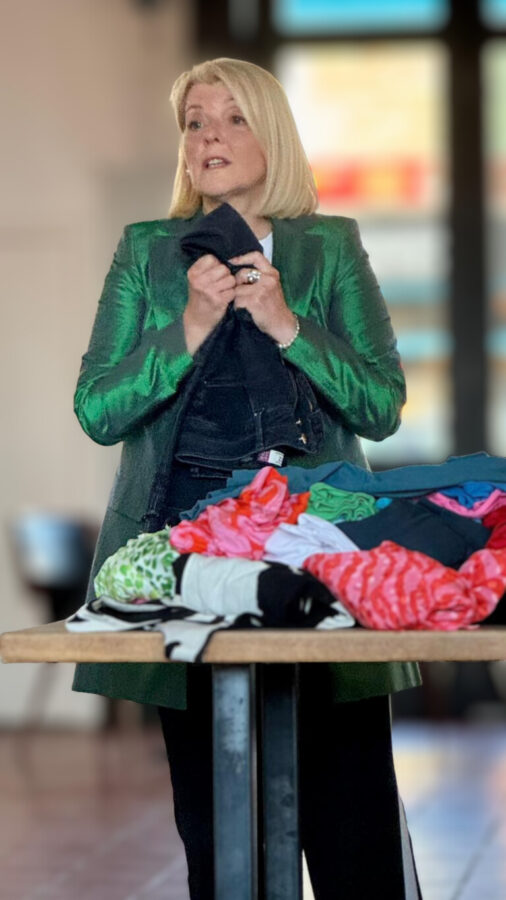
I joined one of her workshops and fell in love with her work right away!
In this interview, we cover:
- why (new) mums struggle to keep on top of the mess
- how clutter affects your mental health (more than you think)
- where to start when you feel completely exhausted
- how to create a calmer home without burning yourself out
Let’s get into it!
The KonMari method explained
1. Can you please explain KonMari method in simple terms?
It’s a tried and tested method of decluttering and tidying created by the renowned Japanese organising expert and author, Marie Kondo.
The method focuses on tidying by categories of belongings, paying attention to your reaction to each item, and only keeping those that create a calming, meaningful, and joyful environment.
It offers a one-time major reset of your home, because the skills you learn during the process help you avoid ending up in the same situation again.
It focuses on what brings joy, rather than what doesn’t, which helps reduce overwhelm and decision fatigue — increasing feelings of hope, confidence, and energy.
Over time, tidying becomes quicker, cleaning becomes easier, and you save a lot more time in the long run.
And because it’s simple, practical, and surprisingly enjoyable, it often encourages the whole family to get involved too.
The affect of clutter on mum’s mental health and anxiety
2. Why is it so hard to keep your house tidy after having a baby?
Many mums are often also doing the job of several people – cooking, cleaning, shopping, caring for the baby and the family, and sometimes working or running a business too.
Their time, energy and attention are constantly pulled in different directions… usually on very little sleep.
All human beings, including mums, have a limited supply of mental and physical energy, so something has to give.
Family and finances naturally come first, which leaves very little time and energy for anything else.
And when you add the fact that many mums have never been shown simple, effective tidying systems, it’s no surprise so many struggle to keep their homes tidy.
3. Why mess even bothers new mums in the first place?
Having a baby often comes with a huge lifestyle change.
And a huge increase in “stuff” at home.
Psychologically, this can push the brain into “protection mode”. The brain starts to produce thoughts that encourage rest, alongside physical feelings of exhaustion, almost as a way of saying: slow down, you need to recover.
Because of this, anything that feels like extra effort – like tackling piles of clutter – can feel completely overwhelming.
4. Can a messy house affect mums’ mental health?
Clutter creates constant visual noise. It reduces space to function and prevents you finding things easily.
This keeps the brain in a low-level state of anxiety which chips away at concentration, feelings of control and calm and most importantly self-confidence.
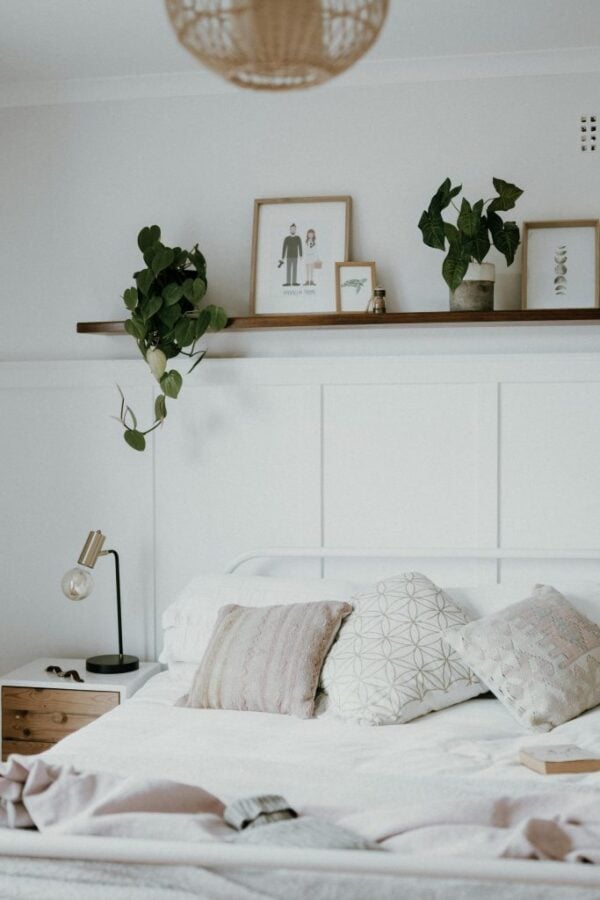
And, when social media constantly bombards them with click bait of perfect show houses Mums can start to believe they’re the only ones unable to keep their home tidy or that they’re “failing”, which isn’t true.
You may also like:
- I Tried Gousto Recipes for a Month as a Busy Mum – Here’s the Honest Truth
- Easy Meals for New Parents: 10 Recipes You Can Make in 20 Minutes or Less
- 7 Simple Ways to Make Motherhood Easier – Even If You Have Zero Time!
5. What is the link between clutter and anxiety in mums?
The visual noise of clutter, being unable to find things, constantly having to remember where things are, and seeing unfinished tasks all around you can keep the brain and body in a low-level state of anxiety.
It creates a constant background pressure that quietly drains mental and physical energy.
So when everyday challenges or unexpected events come up, they can feel much more overwhelming and harder to manage.
6. I feel embarrassed about my messy house – what would you say to me?
Your home reflects where you are in your life, not who you are or your worth.
Research shows that around 80% of adults in the UK (not just mums) struggle with keeping a tidy home, so it’s actually a very common issue.
In Scotland, and in many places, decluttering and tidying are rarely taught as a life skill in school. So unless you’ve picked it up from someone else, how are you meant to just know how to do it effectively?
But the good news is there are tried-and-tested, easy-to-learn ways to turn things around quite quickly.
Practical tidying tips for busy mums
7. Where do I start when I feel completely overwhelmed?
Firstly, stop, slow down, and take a moment to think about what you want your home to look like and provide for you.
Notice what you like about it right now… and what feels like it’s missing that could support you more.
More space to relax? A calmer family area? A clearer kitchen so meals feel easier? A place for laundry that actually works? Or simply easier access to the things you use most or that lift your mood?
This helps in two ways.
First, shifting your focus towards what you do want (order, space, calm, joy) instead of what you don’t want (clutter and chaos) can create a much more positive mental state.
It helps calm the nervous system and encourages feelings of hope, motivation and creativity — basically the energy you need to get started.
Second, research shows that having a clear, positive goal makes it far more likely you’ll follow through.
You wouldn’t start a journey without some idea of where you were going, would you?
8. What can I do in 10 minutes a day to reduce clutter?
Start small, start with items that you have the least emotional attachment to and that are likely to have the biggest impact in terms of moving you towards your ideal home and lifestyle goals.
If you only have 10 mins you could start with baby vests, socks, pants or baby grows.
The colours and feel of the fabric is likely to increase your mood, deciding what to keep and let go of won’t be overly stressful, it could reduce the washing pile and immediately free up drawer space.
Big reward for little effort!
9. What should you declutter first when your whole house feels overwhelming?
Tidying by room can often lead to a limited, surface-level result.
It usually means things just get moved from one space to another, rather than properly dealt with.
Tidying by category tends to have a much bigger and longer-lasting impact.
Clothing is a great place to start.
People are generally less emotionally attached to clothes than other categories like sentimental items, which helps reduce overwhelm. Clothing can also be easily broken down into smaller sub-categories, making it much more manageable within short pockets of time.
And because clothing is usually spread throughout the home, decluttering it creates a big visual difference quite quickly — which can instantly boost feelings of calm and confidence.
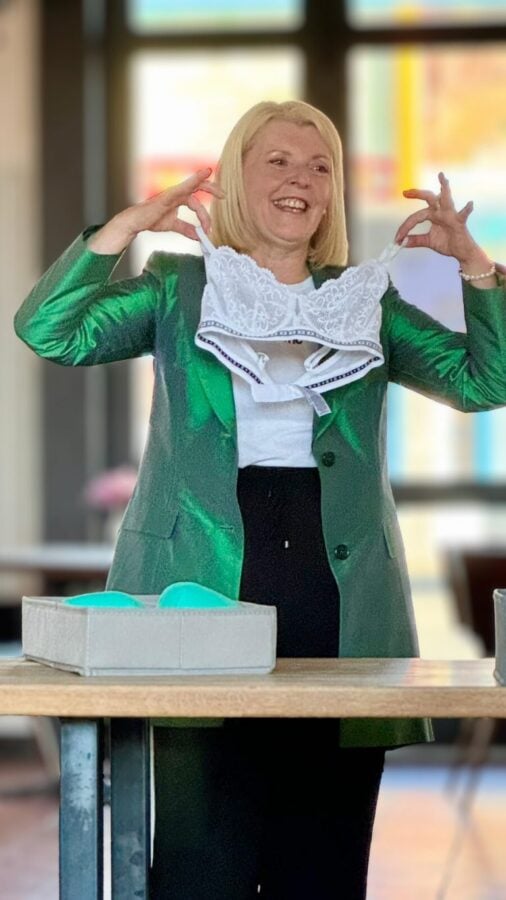
Start by gathering one small sub-category, like baby vests or baby grows, and bring them all into one place, like a bed or table.
Then go through each item one by one and decide whether to keep it using what Marie Kondo calls “joy-checking”. If it feels lovely, fits well, makes you smile when you imagine your child wearing it, and is in good condition, you keep it, fold it, and put it away neatly.
You can even label drawers afterwards so everything has a clear home and is easy to find.
10. How to keep on top of laundry and toys with a baby?
Keep it simple — if things are not fitting into the space, it can be a sign that there’s too much and it may be time to reduce what you have.
Declutter little and often, rather than waiting for it to build up. Even small moments when you’re putting things away or before a wash cycle can make a big difference.
Think about how often clothes actually need washing. According to some laundry experts, items like pyjamas, trousers, jeans and jumpers only need washing after 3–4 wears unless they’re visibly dirty.
And simple habits like folding and putting clothes away straight after drying can significantly reduce ironing later on.
Try making tidying a family activity, followed by something nice together afterwards. This not only lightens the load, but also helps children learn where things belong and may encourage them to help more in the future.
Rotating children’s toys is another great one. It reduces clutter, creates more living space, and makes old toys feel “new” again when they come back out.
11. How do you stop your house from getting messy again after you’ve just tidied it?
Don’t wait to feel motivated because like all emotions, motivation comes and goes!
Focus on systems instead.
Make sure similar items are grouped together and everything has a clear “home” and whenever you buy something new, consider what you could let go of to make room and stop clutter building again!
12. What are the easiest daily habits to keep a tidy home with kids?
Try doing a 5-minute tidy up just before settling down at the end of the day.
Put things away in their designated places.
And, as I mentioned before, involve the family in the game.
Even very young children could be given age-appropriate things to do.
How to get your kids and partner partner involved
13. How do you deal with children’s artwork, school papers and sentimental keepsakes?
Try to remember that you’re keeping the memories, not the volume of stuff.
Aim to keep a small, intentional selection that can be easily stored, displayed, or looked back on. You can also photograph some items and keep them as a digital collection.
In the KonMari Method, sentimental items are only tackled at the very end, after all other categories have been sorted.
By that point, you’ve already built your “joy-checking” skills, which makes it much easier to decide what to keep and what to let go of with confidence.
14. How can I get my partner to help with tidying without arguing or nagging?
Focus on the shared benefits of tidying up — more time and energy to spend together, and a calmer home environment.
You could also think about activities they enjoy doing at home, and how creating more space could make that possible.
There’s no need to blame or nag.
Instead, just focus on decluttering and organising your own things, as well as your children’s.
Often, when partners see the difference it makes to the home and your overall mood, they naturally become more open to getting involved with their own things too.
Psychologically, when people are given the freedom to choose their own course of action, they’re more likely to make a change — and for it to last longer.
15. Can toddlers and young children learn to tidy using the KonMari Method?
Yes, children can absolutely be involved at a very young age. Even toddlers are able to choose their favourite toys and clothes.
Coloured labels can be used to help guide children to put things away and find them again easily.
Simple folding and storage methods are also easy and fun to teach and do. It’s great for building decision-making skills, independence, and confidence in children from an early age.
And it can also mean mums save time and energy too!
16. How do you keep your house tidy with a newborn who won’t let you put them down?
This is a so tough! The way to go is to work with not against your situation.
Fighting will only stress you out more! Your baby is the most important thing to you so you could maybe try using a sling so your hands are free while retaining close contact.
If you have a strategy of what you’re aiming for written down, and sub-categorise, you could break it down into micro tidying moments.
We’re looking for improvement not perfection.
17. Why is it so hard to let go of things, even when you don’t need them anymore?
It’s rarely about the actual item itself — it’s usually about the meaning we attach to it.
That could be a memory linked to someone we’ve lost, a reminder of a past version of ourselves, or even feelings like guilt, shame, or fear… such as the belief that we might need it again one day.
Because of that, letting go can feel emotionally risky, even when logically we know we don’t need the item anymore.
18. What surprises people most when they declutter their home?
What often surprises people is that decluttering, when done in the right way, can become a really safe space to process emotions. It can help you notice, name, and gently move through feelings and thoughts that may have been sitting there for a long time.
It’s never just about the “stuff” — it’s often about what the stuff represents.
Final thoughts
If there is one thing I want every mum reading this to take away, it is this:
Your home is not a reflection of your worth.
It is a reflection of your season.
And some seasons are messy, loud, overwhelming, and exhausting – not because you are doing anything wrong, but because you are carrying a lot.
You are not failing, you are just in a full season of life.
And the goal is not perfection.
It is creating small pockets of calm inside the chaos.
Because a calmer home doesn’t come from one big reset…
It comes from small moments of care, repeated gently over time.
Your next read:
- 7 Simple Ways to Make Motherhood Easier – Even If You Have Zero Time!
- I Tried Gousto Recipes for a Month as a Busy Mum – Here’s the Honest Truth
- Easy Meals for New Parents: 10 Recipes You Can Make in 20 Minutes or Less
- Powerful Tips for Working Mums: Real Life Support for Balancing Work and Motherhood

PhDr. Ivana Poku is the author of Motherhood – The Unspoken, an award-winning blogger and maternal mental health advocate. Through her work, she is on a mission to create a world where mums feel seen, heard and supported. Ivana is also a mum of three boys, including twins, and lives with her family in a small coastal town in Scotland.