 Ivana Poku
 You’ve just had a baby, and let’s be honest: nothing can prepare you for the level of sleep deprivation that comes with those newborn weeks.
Being a sleep deprived mum can feel extremely hard.
Between night feeds, newborn wake ups, and broken sleep, many new parents struggle to cope with postpartum sleep deprivation.
The phrase “sleeping like a baby” suddenly feels like a cruel joke.
Some babies wake every hour.
Some like to party at 3 a.m.
(Yes, some sleep through right away… but let’s not think about those for now).
And you? You’re wondering if you’ll ever feel human again.
First things first: you’re not alone.
We’ve all been there.
Every new mum goes through this stage in one form or another.
The good news? It won’t last forever.
But while you’re in it, it definitely feels like it will.
That’s why in this post, I’m sharing practical ways to cope.
And if you want more support during this challenging time, join my FREE 7-day email course, where I’ll show you simple steps that will make mum life much easier – and more enjoyable.
Before we get to the actual tips, let’s talk about what sleep deprivation actually is.
What is postpartum sleep deprivation? (and why it feels so brutal)
Sleep deprivation is when you’re really tired because you haven’t had enough proper sleep for a long time.
For tired new mums, it’s all the harder as you have to care for a newborn while being sleep deprived.
You wake up many times at night to feed or calm your baby and rarely get a long stretch of sleep.
It doesn’t just make you tired – it can make your brain feel fuzzy, make you grumpy and irritable, and make even small tasks feel hard.
The good news is that this stage won’t last forever.
With the right support and tips, you can get through it and start feeling like you again.
You may also enjoy these posts:
- When do babies sleep through the night? (Here’s what worked for us!)
- Why newborn stage is the hardest
- When do babies get easier?
Tips to cope with sleep deprivation after having a baby
1. Sleep when baby sleeps – if you want to
Some sleep deprived mums love to sleep when baby sleeps.
Some – like myself – don’t.
There is no right or wrong way here.
Listen to your body.
If it tells you to nap, go for it.
If it tells you to read, scroll, or do something that feels like you, that’s fine too.
Sometimes, doing an activity you enjoy gives more of an energy boost than sleep.
The key?
Do what helps you most – without guilt.
2. Share the load
If you have a partner, take turns at night so each of you gets at least one solid block of rest.
Some couples take shifts, others trade nights.
When our twins were babies, we each took responsibility for one baby at night and it worked for us.
There’s no perfect system, just make sure you’re not carrying everything alone.
This isn’t the time to play superhero (you are one anyway).
Be honest about what you need, and then ask for it.
If your partner isn’t involved as much as you’d like (or not at all), check out my post Husband not helping with a newborn? Try this (It actually works.).
3. Get paid help
If your budget allows, consider paid help – whether that’s a night nanny, a postpartum doula, or even a cleaner.
Sometimes, just outsourcing one thing (like housework) gives you the mental and physical rest you desperately need.
This is not the time to be penny-pinching at the cost of your sanity.
If spending a little extra means you get to rest, recover, and function better, it’s worth every single penny.
Think of it as short-term support for long-term gain.
You’re making sure both you and your baby have the best version of you.
And that’s priceless.
I share my experience of how getting help helped our third baby sleep through from three months old in this post.
4. Go to bed as early as possible
Forget the Netflix binge (for now).
Okay, you’re allowed occasionally, but try to make it the exception, not the rule.
Go to bed earlier than usual so you can get some rest before the midnight wake-ups begin.
You dn’t have to sleep, just lie down and relax.
Even one or two hours of rest before the first feed can make a huge difference.
5. Don’t obsess over how little sleep you’re getting
It’s easy to spiral into panic: “I’ve only had three hours… how will I survive tomorrow?”
But stressing about sleep only makes things worse.
What helps me is telling myself: “Okay, I might not sleep tonight.”
Strangely enough, that acceptance takes the pressure off.
Sometimes I fall asleep after that. Sometimes I don’t.
And that’s fine.
It’s still better to be “just” sleep deprived, than being sleep deprived AND stressed about being sleep deprived.
7. Try soothing tricks
Sometimes, no amount of rocking seems to work.
That’s when many tired mums swear by tricks like:
-
A short car ride
-
White noise or a vacuum cleaner
-
Gentle tummy-down cuddles with light pats
- Baby massage (you can find great video tutorials on YouTube)
-
Baby-wearing while you move around
-
Calming affirmations
Affirmations can be incredibly powerful – if you have the right ones! If you’re struggling to come up with any, snag my free PDF with 19 Calming Affirmations that will calm your mind in seconds!

8. Ask for and accept help without guilt
If someone offers to hold your baby, fold laundry, or bring food – say YES.
This isn’t weakness, it’s survival.
Some cultures have a family member move in for the first few months.
If that’s not an option, create your own “village.”
I talk about more how in the post How to create your own community of mums.
9. Fuel your body
Postpartum sleep deprivation makes you crave sugar and caffeine.
A little caffeine is fine, but balance it with:
-
Hydration (drink more water than you think you need)
-
Quick, nutritious snacks like fruit, nuts, or yoghurt
-
Simple meals (hello, grocery delivery and pre-cut veggies)
Your body is healing and needs fuel.
Think of it as energy for both you and your baby.
10. Take micro naps – again, if you want to
If you can’t manage a long nap, even a 10–20 minute “power nap” may reset your brain.
Some new mums even learn to nod off sitting up with baby safely in their crib nearby.
The point isn’t deep sleep, it’s giving your brain a quick recharge.
Some mums feel more exhausted after a short nap, so if this is you – don’t do it.
Always listen to your body, there is no right or wrong here.
11. Move your body
It sounds counterintuitive, but a short walk or light exercise will give you an energy boost.
Fresh air + movement = a clearer mind.
Even a walk around the block with the pram counts.
12. Lower your standards (for now)
Your house won’t be spotless.
Your meals won’t be fancy.
And you probably won’t remember where you put your keys.
That’s okay.
Right now, it’s about survival.
Lowering expectations helps you feel less pressure.
13. Keep reminding yourself that the newborn stage won’t last forever
The nights feel endless, but they won’t last forever.
One day, your baby will sleep longer stretches – and so will you.
Hold onto the small wins (like that first 4-hour stretch) and take it one day at a time.
Things look much harder when you focus on what’s going to happen in a month or a year.
That’s why focusing on today, and today alone, is incredibly liberating.
Final thoughts
Sleep deprivation is one of the hardest parts of early motherhood.
But you will get through it.
Right now, it feels endless, but this stage is temporary.
One day, it will be a distant memory, and you’ll hardly even remember it.
To get a complete roadmap for surviving the first six months – with tips on feeding, mental health, bonding, and more – read my post: How to Survive the Newborn Stage: Your Guide to the First 6 Months.
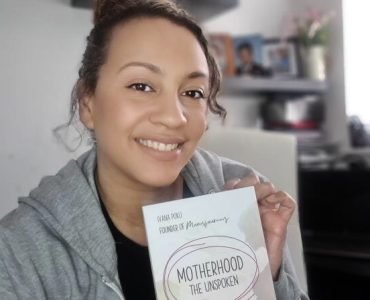
And if you’re curious how other first time mums survived the newborn stage, you can read their real life stories – how they coped, what they’d tell their past selves, and their advice for you – in my book Motherhood: The Unspoken.
FAQs
1. How many hours of sleep do new mums actually get?
On average, new mums get around 4–5 hours of broken sleep in the first few weeks. It’s normal for it to feel exhausting, and it does get better over time.
2. How can I cope with sleep deprivation after having a baby?
Focus on micro naps (if they work for you), prepping quick meals, lowering your expectations, and using things like white noise or baby wearing to settle your baby so you can rest. You can also build your own supportive community of mums in your local area – this is gold for exhausted new mums.
3. When does sleep deprivation get better after having a baby?
Most babies start sleeping longer stretches between 3–6 months. It varies for every baby, but things can get better faster with the right support and self care.
4. Is sleep deprivation harmful for new mums?
Chronic lack of sleep can affect mood, memory, and even increase the risk of postpartum depression. That’s why rest and asking for help are so important.
5. What can I do if I feel too wired to sleep when my baby sleeps?
Try calming rituals like deep breathing, a warm shower, reading, or listening to soothing music or audiobook. Even just lying down with your eyes closed can be restorative. The key is not to stress about not sleeping – when you feel calm while awake, it can actually leave you feeling more rested than hours of sleep while stressed.
6. Can sleep deprivation affect bonding with my baby?
Yes, exhaustion can make bonding feel harder, but that doesn’t mean it’s not going to happen or that you’re failing. Maternal love and bond is a process that develops over time.
7. Is it normal to feel exhausted all the time as a new mum?
Yes, it’s completely normal to feel exhausted as a new mum. Between night feeds, constant care, and adjusting to life with a baby, your body and mind are working nonstop. It’s a lot to carry. But remember, it’s temporary, and asking for help, speaking up about how you feel, or taking small (or big) moments to yourself can make a huge difference.