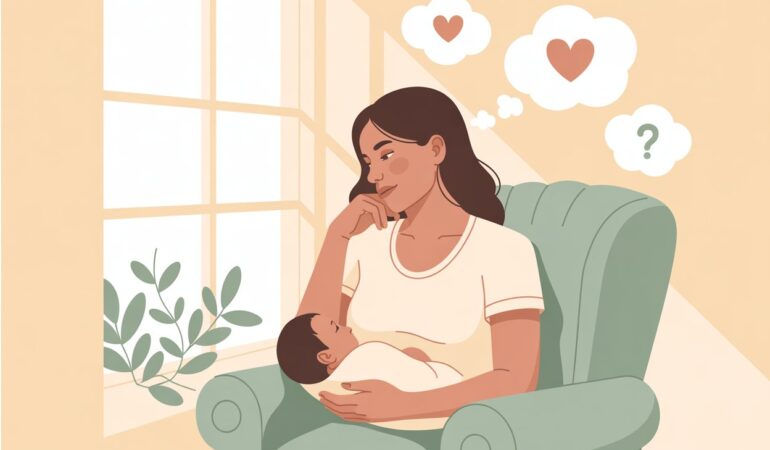
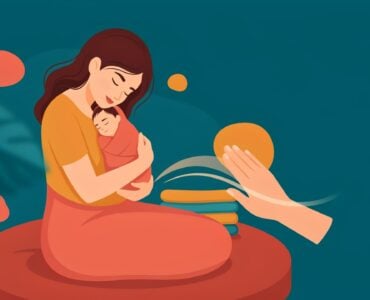
One minute you’re staring at your baby thinking, How did I get so lucky?
The next minute you’re crying because you dropped your toast.
Yes. Toast.
And then you start wondering…
“Is this normal?” “Am I failing?” “Why does nobody talk about this?”
Let’s talk about it.
Because postpartum mental health is something almost every mum struggles with.
Yet hardly anyone explains what’s normal.
And what’s not.
So let’s break it down.
And if you’re currently struggling, and want more tips on how to maintain good mental wellbeing as a new mum, grab my FREE Postpartum survival toolkit.
First things first: Anything you feel is normal
Let me say this straight away.
If you’re not feeling okay, you are not weak – and you are definitely not failing at motherhood.
You’ve just had a baby, which on its own is a MASSIVE deal, yet we somehow expect ourselves to carry on like nothing happened. (crazy, right?)
Your body has been through a LOT, your hormones are all over the place, and sleep is now more of a rumour than a real thing.
And still, there’s this quiet pressure to “enjoy every moment”.
But real life doesn’t work like that.
Feeling lost in any way is expected.
It simply means you’re adjusting to a huge life change.
So if you’ve caught yourself thinking, “Why am I not handling this better?” please know you’re handling it exactly how you’re supposed to.
There are no right or wrong feelings you “should” have.
What is actually normal after giving birth?
Let’s talk about this properly, because this is where most mums get confused.
After giving birth, a lot of things feel different.
And most of them are not talked about enough.
You might feel emotional for no obvious reason and then wonder what on earth is wrong with you.
One minute you’re fine, the next minute you’re crying because you can’t find a clean muslin.
It sounds silly, but it’s very common – and expected.
Many new mums feel overwhelmed in the early weeks.
The only problem is that people don’t talk about it enough, so it catches more new mums off guard.
We expect to be tired and life to change.
But we don’t expect everything else that comes with becoming a new mum: feelings of loneliness, mood swings, rage, doubts, anxiety…
For many mums, these feelings ease with time and the right support.
I mean, how do you decide what deserves more attention and what doesn’t?
I always say this: it doesn’t have to be an “official” problem to matter.
If you feel like you’re not coping, or something just doesn’t feel right, it deserves attention.
Even if it feels small right now, addressing it early can stop it from turning into something bigger.
The tricky part is that many mums assume struggling is just part of motherhood.
So they wait and push through.
And they hope it will pass.
Sometimes it does.
But sometimes, especially without support, it can grow into something much harder to deal with.
What about postpartum PTSD?
Sometimes “something more” has a name most mums never expect: post-traumatic stress disorder (PTSD).
1 in 4 mums show symptoms of birth trauma, and around 1 in 20 develop full postpartum PTSD, even after a birth that was medically fine on paper.
Read that again, my darling, because it matters: your birth doesn’t have to have gone wrong for it to have shaken something loose in you.
What makes a birth traumatic is how it felt to you while it was happening.
Maybe:
you felt unheard
you felt out of control or like your body wasn’t your own
it was fast and frightening, or slow and endless
You don’t need a big dramatic story to justify how you feel.
Here’s how PTSD can feel like:
Flashbacks or intrusive memories: The birth replays in your mind, sometimes triggered by a smell, a hospital corridor, or a throwaway comment.
Nightmares: About the birth itself, or about your baby being in danger.
Avoidance: You’re steering clear of anything that brings it back: the hospital, the car park, or conversations with other mums about their births.
Feeling constantly on edge: You’re jumpy, watchful, like you’re expecting something to go wrong even when everything is fine.
Numbness, or trouble bonding: You’re feeling disconnected from your baby when you expected to feel love, and feeling ashamed of that too.
The difference between PTSD and PPD
Postpartum depression tends to sit low and heavy.
PTSD sits on high alert, like your nervous system never got the message that the danger has passed.
And the two often show up together.
If any of this sounds like you, please hear me: you are not being dramatic, and you sholud not just “get over it”. This is your nervous system doing exactly what it’s built to do after something overwhelming.
And it’s treatable. Trauma-focused talking therapies, like EMDR or trauma-focused CBT, can help. Speak to your GP, doctor, or health visitor who can refer you. Organisations like the Birth Trauma Association also exist purely to support mums going through this.
When should you ask for help?
As soon as your gut is telling you that you need it.
When it does, be prepared for a little voice in your head to pipe up: “Come on, you should cope! If you ask for help this early, everyone will think you’re failing. They’ll think you’re a bad mum.”
That’s totally normal.
It’s simply your old belief system talking.
But when you listen to your gut, you’ll know when it’s time to speak up and ask for help.
When a midwife asked me during check-ups if I was feeling okay mentally, I could literally hear all my insides begging me to be honest.
But my fear of being judged won.
This is a mistake many mums make, and then spend months or even years struggling unnecessarily.
Remember: your intuition is ALWAYS right.
If it tells you to get help, listen to it.
Who should you talk to?
Everyone says you should speak to your GP, midwife, or health visitor.
And yes, I agree, but let’s be real – it’s often easier said than done.
If speaking to your GP feels like too much, start smaller.
Talk to someone you trust.
Ideally, a fellow mum who’s been there.
But here’s the thing: sometimes the hardest part isn’t finding someone to talk to.
It’s the fear of being judged.
“What if they think I’m a bad mum?” “What if they don’t take me seriously?” “What if everyone finds out I’m struggling?”
Totally normal thoughts.
And honestly, those fears are usually louder in your head than in real life.
Most health care professionals, friends, and partners just want to help.
You don’t have to explain everything perfectly.
You don’t need the right words.
Even saying, “I’m not okay and I don’t really know why,” is enough.
The important thing is that you don’t keep it all to yourself.
Because postpartum struggles—or any struggles, really—grow louder in silence.
One more thing I have to mention: sometimes mums have bad experiences when they open up.
Maybe someone didn’t understand, or dismissed what they were feeling.
If that happens to you, don’t let one “bad” experience put you off.
It doesn’t mean you’re wrong.
It just means you opened up to the wrong person.
Simply choose someone better.
What can help – and it’s often not as scary as you think
Now that you’ve decided to speak up, the next question is: what does support actually look like?
Here’s the good news: it doesn’t have to be anything “big.”
Support can be small, simple, and still make a huge difference.
Talking to a professional can help you sort out what you’re feeling. A GP, midwife, or mental health nurse can point you to the right resources.
Sometimes it’s therapy. Sometimes it’s a peer support group. Sometimes it’s just reassurance and guidance for those first few months.
Having someone listen without judgement is extremely powerful.
What also helped me personally was practising self-compassion. Often, it’s not the actual problems that cause the most harm—it’s how we feel about them.
If you constantly tell yourself you’re a bad mum, or that you should feel a certain way, it can show up as poor mental health and even more struggle.
So please, be kind to yourself.
You’re adjusting.
You’re learning to be a mum.
And we all learn—and keep learning—every single day.
Conclusion:
There you go!
Postpartum life is messy, confusing, and exhausting.
You’re life has just changed by 180 degrees, so anything you feel or think right now is totally normal.
The most important thing to remember?
You’re not supposed to navigate this journey alone.
Speak up, reach out, and be gentle with yourself.
If you want more support and daily tips that will help you make life with a baby much easier (and more enjoyable!), grab my FREE Postpartum Survival Toolkit.
PhDr. Ivana Poku is the author of Motherhood – The Unspoken, an award-winning blogger and maternal mental health advocate. Through her work, she is on a mission to create a world where mums feel seen, heard and supported. Ivana is also a mum of three boys, including twins, and lives with her family in a small coastal town in Scotland.
PhDr. Ivana Poku is the author of Motherhood – The Unspoken, an award-winning blogger and maternal mental health advocate. Through her work, she is on a mission to create a world where mums feel seen, heard and supported. Ivana is also a mum of three boys, including twins, and lives with her family in a small coastal town in Scotland.
27 UPLIFTING AFFIRMATIONS FOR NEW MUMS
Download these FREE affirmations and feel lighter in seconds!