Last Updated on September 7, 2026 by Ivana Poku
Have you had your baby and suddenly found yourself missing your old life?
The freedom, the peace, the you that existed before the baby took over everything.
It’s confusing, I know.
Especially when you really wanted this baby.
You miss the sleep-ins, late nights, date nights, even just being able to pop into a shop freely.
And then comes the guilt.
Because you do love your baby (And if you don’t feel any special bond yet, that’s totally normal too!)
You wanted the baby.
So why do you miss what you were willing to and happy to give up?
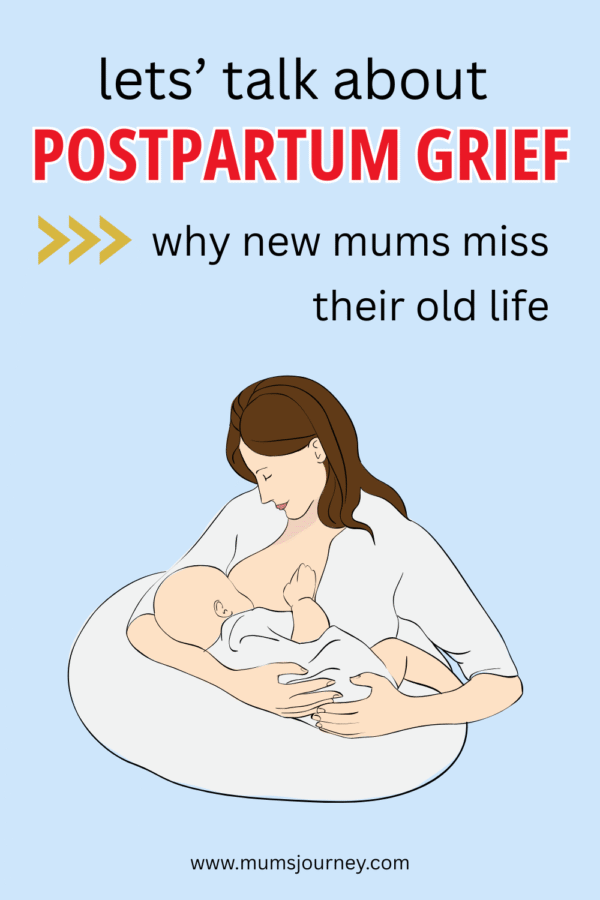
What you’re feeling has a name: postpartum grief.
And it’s way more common than you think, people just don’t talk about it enough.
(If you want to discover more things people don’t talk about, check out my book Motherhood – the Unspoken).
So many new mums (myself included) quietly wonder if something is wrong with them because they miss their old life so much.
But the truth is, this experience is incredibly common.
If you want to understand why this happens and what helps, you’re in the right place.
In this post, I cover:
- why you miss your old life (even if you really wanted the baby)
- why it can feel so heavy
- what can help you feel better
But first, hello!
I’m Ivana, a mum of three boys (including twins), the founder of MumsJourney, and author of Motherhood: The Unspoken, on a mission to create a world where mums feel seen and supported.
If you’re in the thick of things right now, grab these free affirmations that I designed specifically for when motherhood feels too overwhelming. They are super powerful and bring you relief in seconds.
Related posts:
- Regretting having a baby? This is more common than you think
- Newborn trenches: Why it’s so hard (and when it ends)
- When do babies get easier? Honest timeline (7 ways to make it easier today)
What is postpartum grief?
When my twins were born in 2016, I really struggled to life with them.
I missed my old freedom so badly it physically hurt.
I kept thinking, What have I done? Why did we do this to ourselves?
And then I’d feel like a horrible mum for even having those thoughts.
Now I know it’s a loop many new mums get stuck in.
But don’t worry there’s nothing wrong with you.
It’s “just” postpartum grief.
It’s not talked about as much as about postnatal depression, but it’s when you mourn your old life after having a baby.
Because when you have gained a baby, you have also lost a few things.
Your independence, your routine, your sleep, or your sense of who you are (your identity).
It’s a LOT to get used to.
Because whatever happens from now on, you will never not be a mum again.
It’s a massive change that’s why grieving your old life is normal and even expected.
It doesn’t say anything about you as a mum as a person. (other than that you are human, that is.)
You can be grateful for your baby and still feel deep sadness for your old life.
They call it “baby blues” but to me, it’s all normal and expected feelings of a new mother.
Why do I miss my old life after having a baby? (even if I wanted it)
To help you understand this on a deeper level, let’s talk about the science behind why you (and many new mums) feel sad after having a baby.
When you give birth, your body goes through one of the biggest hormone crashes it will ever experience.
Research shows hormone levels drop dramatically after birth.
This can affect your mood, emotions, and mental wellbeing.
Now mix that with sleep deprivation, your body healing, feeding your baby day and night, and suddenly being responsible for a tiny little human who depends on you for everything.
It’s a LOT to handle at once.
The first few months with a newborn are often about pure survival.
And it’s not just your body – your identity changes too.
You’ve gone from being “you” to being “a mum” overnight.
And while that’s beautiful in many ways, it’s also a HUGE shock to the system.
Your brain rewires itself to focus on your baby’s safety and needs so have less (or no) space and energy for the things that used to make you feel like you.
That’s why you miss your old life, even if you wouldn’t change your baby for the world.
You may also like:
- How to survive the first 6 months with a newborn
- Postnatal anxiety explained: why you feel constantly on edge after having a baby
- Postpartum mental health: What’s normal, what’s not, and when to seek help
How to deal with postpartum grief as a new mum
Remember, you do not need to “fix” yourself or feel happy right away.
Aim for feeling better in the moment.
Here are a few things can help:
1. Allow yourself to grieve
Your feelings don’t disappear when you ignore them.
They come out later as anger, tears, numbness, resentment, or complete exhaustion.
So now that you know sadness is normal and common, allow yourself to feel it.
2. Stop judging yourself
There is no right or wrong way to feel when you become a mum.
When you lose someone you love, you give yourself time to process and grieve.
The same goes for motherhood.
Instead of beating yourself up for not feeling how you “should”, say to yourself, “Yes, my life has changed overnight, so of course I miss it. It’s normal. I won’t feel like this forever”.
I know how hard it is to find the kind words when you’re deep in it, so I wrote 27 more affirmations like this for you here. You can use them every time your head won’t be nice to you.
3. Talk to someone who gets it
Talk to a fellow mums who’s been there and who understands.
When you see you’re not alone in how you feel, it will help you enormously and life a very heavy weight off your shoulders.
4. Find tiny ways back to yourself
Even as a mum, you are still you – with your own dreams and needs. Once you start feeling a little more human again, find a few minutes each day to do something just for you.
This could be your old hobby, exploring something new, or even starting your own business. (Many new mums do exactly that during this stage of life.)
I’m not saying it’s easy, but having something outside of motherhood that brings you joy and purpose, can be a real lifeline.
5. Get support now
If your sadness is too heavy, talk to someone right now.
Don’t wait for things to get “more serious”.
You shouldn’t have to reach breaking point before asking for help.
The goal is to reach out before you get there.
When missing your old life could be postpartum depression
Now you understand that missing your old life after baby is a normal part becoming a mum.
But sometimes, the sadness can become heavier than it should be.
If you feel low most of the time, cannot enjoy things you usually do, feel hopeless, cannot function, or the feelings are getting worse, it could be a sign of postnatal depression.
If this is the case, talk to a good friend, your doctor or GP, midwife, health visitor, or a mental health professional.
And please don’t worry or feel embarrassed – they have heard this many times before.
Will I ever feel enjoy having a baby?
It might not feel like it right now, but the sadness won’t last forever.
Bit by bit, your brain will catch up and you will enjoy your baby like you always wanted.
You’ll start to feel more like you again.
One day, you’ll realise you’ve gone a whole week without that heavy feeling in your chest.
You’ll notice you’re not crying as often and that you’re smiling more.
That’s how your know you’ve adjusted – quietly, while you’re busy raising your baby.
So please be nice to yourself.
You’re not a bad mum, you’re just becoming someone new.
And that takes time.
Give yourself space to grow into this new version of you.
And one day, before you know it, motherhood will be much easier and much much more enjoyable.
Here are some more posts I wrote that may help you right now:
- How to get your life back after having a baby
- When does it get easier with a baby? (Real timeline for new mums)
If reading this post made you feel a bit less alone, there’s a whole book of it. I wrote Motherhood – The Unspoken so no new mum has to wonder if she’s the only one feeling this way.
FAQs
1. Is it normal to miss your old life after having a baby?
Yes! It’s a normal and it’s a natural part of becoming a mum. Missing your freedom, old routine, identity, or social life does not make you a bad mum, it makes you a new mum.
2. Why do I miss my old life after baby?
Because your entire world changes overnight. It’s a shock to the system and it takes time to get used to it and enjoy it.
3. Does missing my old life mean I regret having a baby?
No but even if you do have feelings of regret occasionally, that’s also very normal and common. You can also deeply love your baby and still miss your old life. Those feelings often exist together.
4. What is postpartum grief?
Postpartum grief is the sadness and sense of loss many mums feel after having a baby as they adjust to motherhood and grieve parts of their old life.
5. How long does postpartum grief last?
It is different for everyone. For some mums, it eases within weeks as they adjust and get more support. For others, the sadness lasts longer and may need professional help.
6. When should I get help?
If you’re feeling really sad for a long time, it doesn’t seem to get better, or it’s making everyday things feel hard, it’s important to talk to someone. You can speak to a friend you trust, your doctor or GP, midwife, therapist, counsellor, or health visitor.

PhDr. Ivana Poku is the author of Motherhood – The Unspoken, an award-winning blogger and maternal mental health advocate. Through her work, she is on a mission to create a world where mums feel seen, heard and supported. Ivana is also a mum of three boys, including twins, and lives with her family in a small coastal town in Scotland.