Last Updated on August 9, 2026 by Ivana Poku
If you are expecting a baby and feeling sad, worried, or angry for no reason (or just not like yourself), you may be wondering: is this prenatal depression?
Now, most people talk about pregnancy only in connection with happiness, love, and pure joy.
And sure, sometimes pregnancy does feel exciting. But sometimes pregnancy is far from magical.
Sometimes, you:
- feel lonely
- cry for no reason
- want to scream at your husband
- find it hard to get our of bed
- don’t want to do things that normally make you happy
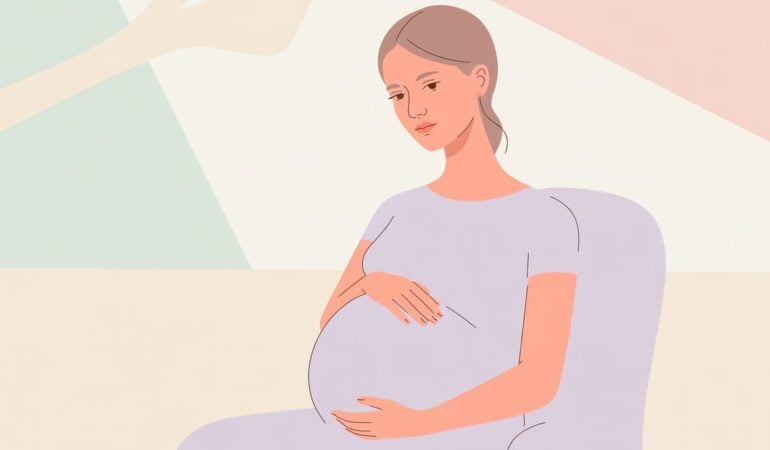
You wonder, What is wrong with me? Is it possible I have postnatal depression before the baby is born? Is prenatal depression a thing?
Yes, it is, and it is very common.
In this post, I share:
- what is prenatal depression
- how it impacts you and your baby
- what causes it
- the signs to look out for
- what can help
Let’s get into it!
What is prenatal depression?
Let’s start with the definition. Prenatal depression (also known as antenatal depression or perinatal depression) is depression that happens when you’re pregnant, It can happen at any point during your pregnancy.
Many signs of prenatal depression can look like normal pregnancy symptoms, for instance:
- feeling tired
- crying more than usual
- feeling stressed and overwhelmed now and then
But prenatal depression feels different. Heavier. You’re not just having a bad day here and there, the heaviness in your heart is constant. It’s like you’re carrying a huge backpack everywhere you go, but nobody can see it.
What are the symptoms of prenatal depression?
Yes. You can get prenatal depression while you are pregnant.
A lot of people think depression only happens after the baby is born. That is why many mums sit there feeling awful and thinking, “Wait… am I even allowed to feel like this?”
You are.
And it does not make you a bad mum.
Prenatal depression can happen at any stage of pregnancy.
Some people feel low in the first few weeks. Others start struggling later on. The feelings can be different for everyone, but common signs include:
- feeling sad most days
- crying more than usual
- worrying all the time
- feeling angry or snappy over tiny things
- not enjoying things you usually like
- wanting to hide from people
- feeling guilty, even when you have done nothing wrong
- struggling to sleep, or sleeping all the time
- feeling like you are not excited about the baby
One of the hardest parts is that these feelings can sneak in quietly.
At first, you may think, “I am just tired.” Then maybe, “I am probably just stressed.”
Before you know it, even brushing your hair feels like a giant mission. Like your brain has turned into a phone with 1% battery and no charger in sight.
Pregnancy can make anyone emotional. But if the sadness, worry, or emptiness sticks around for more than two weeks and starts making everyday life harder, it may be more than “just hormones.”
What causes prenatal depression?
Alright, let’s talk about why prenatal anxiety happens.
Usually, there is not a single reason but a lots of things piling up at the same time. Think of it like trying to carry ten shopping bags at once.
One bag is fine, two is annoying, and by bag number ten, you break – or everything ends up on the floor.
Hormones play a big part too.
During pregnancy, your body goes through huge changes. Hormones rise and fall very quickly, and this affects how your brain works and how you feel.
Stress can make things harder too. Maybe you worry about money, finances, your relationship, or future.
Maybe you are scared about birth, the baby, or whether you will be a good mum.
Those worries can build up until your mind feels overloaded.
Here are some things that can contribute to or cause prenatal depression, including:
- having depression or anxiety in the past
- having family members with depression
- feeling alone or unsupported
- going through a hard pregnancy
- not sleeping well
- dealing with lots of stress at home or work
Perinatal depression and perinatal anxiety often go hand in hand too.
Many mums also feel worried all the time, and their brain treats every little thing like an emergency.
One minute you feel content, the next you believe you failed because you forgot to buy nappies (diapers). Remember, that is anxiety talking.
Prenatal depression in men? Yes, that can happen too
Now, if you’re wondering if prenatal depression can happen to dads too, the answer is a definite YES.
Just like postnatal depression can happen to dads, so can perinatal depression.
Even though dads don’t give birth, they can still feel stressed, exhausted, low, or lonely. They might worry about money, sleep, becoming a parent, or watching their partner struggle.
All of this can contribute to perinatal depression in men.
The difference is often in how it shows up.
For instance, instead of crying, some men become quiet, grumpy, angry, or distant.
They may spend more time at work, scroll on their phone for hours, or act like everything is “fine” -even when it really isn’t.
Statistics say that around 1 in 10 men experience perinatal depression or anxiety during their partner’s pregnancy or after birth.
The problem is (and why awareness is so important) that many dads talk about it even less than mums.
They often feel like they have to be the “strong one” and keep it all together.
So they bottle it up and struggle in silence, often without anyone noticing.
This is not right as nobody should have to do that.
Getting help and support is not optional, it is required. And it is just as important for dads as it is for mums.
Prenatal depression and anxiety: what is the difference?
You may wonder what’s the difference between prenatal depression and anxiety. They often show up together.
Depression usually makes you feel sad, empty, tired, or hopeless, whereas anxiety makes you feel worried, nervous, or on edge all the time.
Sometimes one is louder than the other, sometimes they are equal.
Depression can sound like:
- “I do not enjoy anything anymore.”
- “I feel like I am failing.”
- “I just want to stay in bed.”
Anxiety sounds more like:
- “What if something goes wrong?”
- “What if I am a terrible mum?”
- “What if I forget something important?”
When you have perinatal depression and anxiety together, your mind is exhausted.
One part says, “I cannot do this.” The other part says, “Here are 47 things to panic about right now.”
That’s a lot for anyone.
With prenatal anxiety, you may notice:
- racing thoughts
- feeling sick with worry
- crying often
- feeling restless
- struggling to sleep
- finding it hard to concentrate
- feeling scared even when nothing bad is happening
If you have any of these symptoms, or simply know something is not quite right, you need a treatment.
I’ll talk about treatment options in a minute.
You may also like:
- First Pregnancy Guide: Everything You Need to Know as a First Time Mum
- Pregnancy Anxiety: What’s Normal and When to Get Support
- Pregnancy Rage: Why You Feel So Angry During Pregnancy
- First Pregnancy Checklist: What You Actually Need (and What You Don’t)
- I Read All the Pregnancy Books — Motherhood Still Shocked Me (Here’s Why)
- Is It Normal To Feel Sad During Pregnancy?
What is prenatal depression DSM-5?
When talking about perinatal depression, you may have also come across the term “Prenatal depression DSM-5”.
It sounds confusing and a bit scary, but it is really just the name doctors use for depression during pregnancy.
The Diagnostic and Statistical Manual of Mental Disorders, Fifth Edition is a big book that doctors use to help them understand and diagnose mental health problems.
This book does not list prenatal depression as a separate illness.
Instead, doctors check if a mum has signs of major depression during pregnancy or soon after the baby is born.
If she does, they say it has “peripartum onset.”
That is just a fancy way of saying, “The depression started during pregnancy or after the baby arrived.”
Doctors usually look for at least 5 of these signs that last for more than two weeks:
- feeling sad most of the day
- not enjoying things you used to enjoy
- sleeping too much or not sleeping enough
- feeling tired all the time
- finding it hard to think clearly
- feeling guilty or like you are not good enough
- eating more or less than usual
- feeling very restless or very slow
A doctor does not expect you to tick every box, they simply want to understand how you have been feeling and whether you need more support.
Prenatal depression treatment: what actually helps?
- your midwife
- your doctor
- a therapist
- a friend or family member
It does not really matter who it is. It just has to be someone who you know will listen and support you without judgement. Ideally, a fellow mum who has been through it herself.
Sometimes just saying the words out loud is enough to feel much better.
If you find it hard to talk about your feelings, my “Say it for me” messages can help.
Another powerful way to feel better is therapy or counselling.
One type, called CBT, teaches you how to notice unhelpful thoughts and challenge them. For example, instead of thinking, “I am going to be a terrible mum,” you learn to stop and ask, “Is that actually true?”
Some mums also need medication, such as antidepressants. In that case, a doctor or GP will talk through the safest options during pregnancy.
Here are some other things that can help alongside treatment:
- working on self-love and compassion
- building your confidence
- spending time outside
- asking for help like it is your job
- resting when you can without guilt (remember, resting does not mean doing nothing)
- doing one thing each day that you love
It is also important to mention that healing does not happen overnight.
It is a process that depends on daily small steps.
You may also like:
- Can Men Get Postnatal Depression? Signs, Causes & How to Get Help
- 10 Postpartum Depression Signs and Symptoms (What No One Tells You)
- How I Recovered From Postnatal Depression (And How You Can Too)
What people say about prenatal depression on reddit
If you search for prenatal depression on Reddit, you will find lots of people saying the same thing: “I thought I was the only one.”
Many mums write that they felt guilty because they were not excited all the time.
Some said they cried every day. Others felt angry, numb, or scared.
One mum said she spent months thinking she was “just bad at pregnancy.” I mean, how sad is that?
She was struggling with prenatal depression and didn’t even realise it. This only shows how poor prenatal education on maternal mental health is.
Another lady said that she kept smiling in front of everyone, then cried alone in the bathroom.
This is one of the hardest things about prenatal depression: you can look totally fine on the outside, but inside you are screaming.
The most common thing mums say on Reddit is that they wish they had asked for help sooner.
Once they finally spoke to a doctor, midwife, therapist, or someone they trusted, they started to feel much better and lighter.
This is why talking about it matters so much and is the most important thing to do when you struggle with depression or anxiety.
And the more you speak up, the more mums you show that it is safe for them to speak up too.
Final thoughts
So, is prenatal depression a thing? Absolutely!
It is real, it is common, and it can happen to both mums and dads.
Pregnancy brings huge changes to your body and mind, and it can come with lots of difficult feelings.
It’s a part of becoming a mum. If you think you might have prenatal depression, please talk to someone you trust.
Under no circumstances carry this by yourself.
And if this is your first pregnancy, also check out my post First Time Pregnancy: Everything You Need to Know.
Here are some more posts that you may find helpful:
- Pregnancy Is Not A Magical Time: Honest Truths for First-Time Mums
- 6 Week First Pregnancy Scan: What To Expect (and What’s Normal Not to See)
- Is It Normal to Hate Your Husband During Pregnancy? (Yes, and Here’s Why)
- 7 Simple Tips To Make New Mum Friends (Even If You Are An Introvert)
- 35 Mums Share What They Wish They Had Known Before Having Their Baby

PhDr. Ivana Poku is the author of Motherhood – The Unspoken, an award-winning blogger and maternal mental health advocate. Through her work, she is on a mission to create a world where mums feel seen, heard and supported. Ivana is also a mum of three boys, including twins, and lives with her family in a small coastal town in Scotland.