
 Ivana Poku
 I’ve been told that life after birth is full of cuddles, joy, and sleepy smiles.
Media certainly made it look that way!
But the reality was nothing like that.
When I had my twin boys in 2016, I thought I was prepared.
I’d read all the books, done the classes, and listened to every bit of advice.
But nothing could have prepared me for what actually happened… because no one talks about postnatal rage.
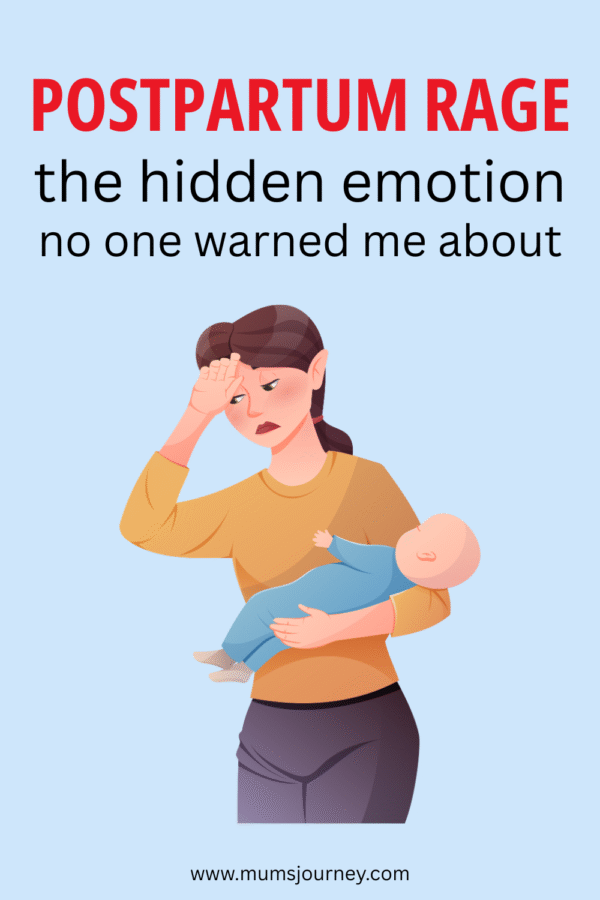
Yes, rage.
The kind that makes you feel like you’re boiling inside.
The kind that leaves you shouting or slamming a door.
The kind that makes you wonder, “What’s wrong with me?”
I didn’t know it had a name back then.
I just thought I was a terrible mum.
The anger I didn’t understand
In those early weeks, I’d find myself snapping over the smallest things.
The twins would both start crying, and I’d feel this fire rise inside me.
I remember thinking, “Why did I even have them?” and then immediately hating myself for it.
I felt trapped, guilty, and ashamed.
It was like a vicious circle: something made me angry, then I’d get angry for being angry.
I wanted to be happy. I wanted to enjoy it.
But I didn’t. I missed my old life, my freedom.
Everyone else seemed to have it all together.
Other mums were smiling, glowing, and posting happy baby pictures, while I was barely surviving.
Related posts:
- How to Keep Your Home Organised as a Busy Mum
- Is It Normal To Feel Lonely After Having a Baby?
- Ultimate Guide to Surviving the First 6 Months With a Newborn
Postnatal rage is real – and more common than you think
Most of us have heard about postnatal depression.
But postnatal rage? Not so much.
Yet it’s actually very common in new mums.
Studies show that around one in three mums experience intense anger in the first year after having a baby.
And here’s the thing: you don’t have to be depressed to feel that way.
Anger is a human emotion.
It’s not “bad.”
It’s your body’s way of saying something’s wrong: that you’re overwhelmed, exhausted, and need support.
But as mums, we’re often told to smile through it.
We’re told to be grateful and “enjoy every moment”.
So when you don’t (and of course you don’t!), you feel guilty and hide it.
And hiding it only makes it worse.
The breaking point
I tried to control my emotions, but it felt impossible.
The crying, the sleepless nights, the endless feeding and nappy changes, it was relentless.
At one point, when the twins were around six months old, I remember thinking everyone would be better off without me.
That was my rock bottom.
One day, a friend came over and found me crying.
I couldn’t hide it anymore. I told her everything – and that conversation changed everything.
It was the first time I admitted how bad things had become to someone other than my husband.
The first time I let someone other than my husband see me.
And the first time I realised I wasn’t alone.
And it was INCREDIBLY liberating.
Like a pressure cooker that gets a long overdue release.
We were all struggling – in silence
After opening up, I started talking to other mums. And I was shocked.
The same women who seemed so “together” were struggling too.
We had all spent months pretending – smiling on the outside while falling apart inside.
It broke my heart.
Why are we all hiding something so normal?
Why are we so scared to say, “I’m not okay”?
The truth is, motherhood can be beautiful and brutal at the same time.
It’s normal to feel angry.
It’s normal to miss your old life.
It’s normal to not enjoy every second.
You don’t enjoy every second of anything, so why should motherhood be any different?
What’s not okay is struggling in silence.
Motherhood, the second time around
When our third baby was born in 2021, those familiar feelings started bubbling up again.
But this time, I did something different.
I talked about it.
I told people how I was feeling before it spiralled.
And you know what? It helped.
The feelings didn’t control me anymore.
They passed in a matter of weeks.
That’s when I realised just how powerful talking can be.
We don’t need to fix everything.
We just need to be heard.
Finding my purpose
My experience changed me completely.
I decided to dedicate my life to helping other mums who feel like I once did: lost, angry, ashamed, and alone.
That’s why I created this Mumsjourney blog and wrote my book Motherhood: The Unspoken.
My mission is simple: to show the world what motherhood really looks like.
To stop pretending it’s always magical.
And to remind every mum that struggling doesn’t make you weak, it makes you a mum.
Motherhood is not a performance.
It’s messy, loud, exhausting, and full of contradictions.
You can love your baby and still crave space.
You can be grateful and still angry.
You can love deeply and still break down sometimes.
You also love your husband or partner, but it doesn’t mean you want to spend every waking hour with them, right? 😉
Why postnatal rage happens?
Now, you might be wondering: why does postpartum rage even happen?
Why some mums feel this intense anger after birth?
The truth is, it’s a mix of physical, emotional, and psychological factors.
After giving birth, your body is flooded with hormones.
These hormonal shifts can affect your mood, energy, and stress levels.
Add sleepless nights, constant feeding, and the pressure to “get it right,” and your brain is on overload.
There’s also the emotional side: the sudden responsibility of caring for a tiny human, the loss of your previous freedom, and the high expectations society puts on mums can all trigger frustration and anger.
If you’re feeling angry, you’re not a bad mum
We often connect rage with a negative emotions, but it is just an emotion.
It isn’t a reflection of how much you love your baby or what good a mum you are.
It means you’re overwhelmed, and you need support – not judgement. (especially not from yourself!)
Think of it like your body’s alarm system: it’s telling you, “Hey, I’m stretched too thin, something’s got to give!”
Pospartum rage is ultimatley your little helper!
So instead of fighting it, or hating it, listen to it!
The more you dismiss it, the louder it will scream.
You’re not alone
If you’re experiencing pospartum rage, please know this: you are not alone, and you are not a bad mum.
Reach out to a friend, a partner, a health visitor, or even just another mum who gets it.
Talk before it builds up.
Because the truth is, the moment we start talking about our struggles, we take away their power.
Let’s stop pretending motherhood is all sunshine and rainbows.
Let’s make it normal to be honest.
Because no mum should ever have to feel like a failure.
If you’re struggling right now, please reach out. Talk to someone you trust today.
If you want to speak to me personally, drop me an email at ivana.poku@mumsjourney.com.
And always remember: You are not alone in this!
Before you go…
If this story resonated with you, you’ll love my free email course Postpartum survival toolkit.
Inside, you’ll get daily tools that help you handle mum challenges with much more confidence and ease!