
Last Updated on October 6, 2026 by Ivana Poku
If you’re in a long-term relationship, I’m sure you’ve long learned that it’s not all a bed of roses.It’s beautiful, and it’s hard.
We all have moments when we second-guess our decision to marry this man. Moments when we want to give up and run away.
It’s a normal and natural result of living with someone for years.
You may feel unseen, like your partner doesn’t understand you, or like you’re running in circles and getting nowhere.
My husband and I felt the same, especially when it came to parenting. We come from different backgrounds, so we each had a different idea of how to raise our kids. We tried to work it out ourselves but couldn’t.
So we turned to Dr. Melissa Cancel aka the Communication Doc. We’d interviewed her on our podcast a few months earlier, and she’d won us both over right away: she was knowledgeable, warm, and had a great sense of humour.
So when we needed help, there was no question who we’d call.
Working with her was so amazing and helpful that we ended up signing up for her full coaching programme.
And when we finished it, I knew I had to write about it!
If you’re thinking about working with a relationship coach but aren’t sure whether it’s right for you or what to expect, this post is for you!
I’m sharing my honest experience: what we worked on, what surprised us, what was hard, and whether it was worth it.
And if you want a simple tool that will help you communicate effectively right now, you can try these free 12 texts to send to him.
Disclosure: This post isn’t sponsored, and there are no affiliate links. However, I’ve partnered with Dr. Cancel, which means you get 10% off her coaching when you mention MumsJourney, and I receive a small referral commission. I only partnered with her after we’d finished the programme and seen how much it helped us.
Related posts:
Online Couples Coaching: My Quick Verdict
- Who it’s for: couples who keep having the same argument, or who are stuck on a problem they can’t solve on their own
- What we loved: practical tools instead of vague advice, and it covered far more than we expected
- What to know: it takes work, and it’s coaching, not therapy
- Reader offer: 10% off when you mention MumsJourney
Why We Needed Help
My husband Yaw and I have a generally happy, loving relationship, but it’s never been perfect. No relationship is.
At the time, the thing affecting us most was how differently we’d been raised and how that showed up in our parenting.
His wat was way more strict than mine, and we couldn’t find the common ground.
When we reached out to Melissa, she happened to be putting together a new coaching programme, and she offered us the whole thing at a discounted rate.
We knew we had more to work on than just parenting, so it was a no-brainer really.
But let me tell you, I had no idea it would change so much more than how we parent!
I have to admit, my husband was a bit sceptical at first. He thought a female coach would be more likely to “side” with me, but he soon admitted he was wrong.
But more on that in a minute!
Who Is Dr. Melissa Cancel – “The Communication Doc”?
Melissa Cancel is a wife and mother with a PhD in relational communication and over 30 years of experience teaching communication.
Put simply, she helps couples build happy, healthy relationships through better communication.
As she says, very few of us are ever taught how to communicate well in emotionally charged moments.
And without the right tools, even strong relationships can wear down over time.
The programme we went through, The Couples Communication Cure, is four weeks of intensive training with ongoing support afterwards.
Her work is education and coaching, not counselling.
That means you walk away with lots of practical tools and support.
This means that you get a lot of practical tools and support.
What Online Couples Coaching Is Really Like
First things first: having the sessions online didn’t make them any less effective. Not for us, anyway.
What really matters is having the right coach.
And if anything, it made things easier. We didn’t have to worry about getting a babysitter or travel.
The sessions with Melissa were super relaxed and incredibly transformational. (more on that soon!)
She is down to earth, and she brings both education and humour into every session.
She has a way of making you feel excited about the work and the whole process.
I think that’s so important in any mentor. If sessions feel forced or awkward, or add more stress than joy, I can’t imagine how they’d ever work.
Remember my husband’s worry that she’d take my side? She was completely objective and never made either of us feel bad.
She gave us the tools we didn’t know we’d been missing, ones we can keep using forever.
The whole programme was eye-opening on so many levels, and we had a lot of fun along the way.
Another thing I loved was how flexible she was. For parents of young children, that’s pure gold!
Related posts:
- Why I put my relationship before my children (and why it’s actually good for them)
- Relationship after kids: Expert tips on how to stay close as parents
- “Rub Me, Don’t Pat Me” – Why Touch Feels Different After Baby
What We Learned
If I gave you a full breakdown of everything we learned with Melissa, this post would be way too long to read.
So here are the most important ones:
1. How your upbringing affects your relationship (without you even noticing)
This one truly blew my mind.
We filled in a worksheet that showed where each of our cultures sits and how much impact it has in our daily lives.
Suddenly, so many of our parenting arguments made sense. I always had a problem with Yaw being “too nice” to other people. I know how this sounds, but if you knew him, you’d know what I mean lol.
Now I understand it’s simply his culture and the way he was brought up. Same goes with his strict parenting. I now understand it’s the way they parent their children – manners and respect are a big deal, and children who don’t show respect really trigger him.
Once I understood it’s simply how he was raised, it helped me to be much more understanding with some of the things I used to tell him off for.
And vice versa, of course.
This is just one of many examples, but as you do this work, you start uncovering new layers of differences and different values you weren’t aware of. And once you are, it helps you have much more understanding of each other.
2. The main differences between men and women
This one was a real “aha!” moment for both of us.
I thought I knew a lot about how men’s and women’s brains work differently, but I really didn’t lol.
We both now understand how men and women often think, feel, and react differently. In other words, how we’re wired.
It’s not about who’s right or wrong. It’s about understanding each other and meeting halfway.
This is especially useful for all those “normal” things we women joke about. Like, how he doesn’t listen when you talk to him, or why your partner doesn’t help with the baby unless you ask.
Once you understand why he does it, and that it really isn’t his fault, it’s so liberating. For both of you!
You don’t get angry, he doesn’t feel attacked, and neither of you ends up reacting from that defensive place.
3. How To Handle Conflict
We learned that we all have a go-to conflict style.
Once we knew ours, we could finally see why our arguments went round in circles.
It sounds almost too simple to matter, but it really does!
Because now, when an argument starts, we can spot the pattern before it takes over. Instead of falling into the same old loop, we stop and choose a different way.
Melissa helped us understand not only each other, but also ourselves.
And once you understand why you react the way you do, it’s so much easier to stop the blame or criticism. Both towards yourself or your partner.
4. How To Really Listen
I thought I was a good listener.
But turns out, I was mostly waiting for my turn to talk. (As most of us do, let’s be honest.)
We learned what gets in the way of listening (tiredness, stress, parenting mental load, duties, distractions…) and a simple method: Stop, Look, Listen. Stop the noise in your head, look at your partner, and listen to understand, not to reply.
Here’s something that really hit the nerve: relationship researcher John Gottman found that one of the biggest predictors of divorce was partners not acknowledging each other in everyday conversations.
The “small” moments matter the most – and are not small at all!
5. How to communicate without blowing up
Before, when something annoyed me, I’d voice it right there and then. Usually tired, usually frustrated, so I wasn’t exactly nice in my delivery.
No wonder it never went well!
Now we know that when you bring something up, it matters just as much as what you say.
We’ve also learned to respond instead of react. This is super important!
Now, don’t get me wrong. We are not perfect.
Sometimes we still have a go at each other without really listening. And that’s okay! Sometimes you just need to release the beast.
But here’s the key: we never leave it there.
We give ourselves space for the emotions to settle, then come back to it and talk it through properly.
The goal isn’t to have “perfect” conversations all the time. It’s knowing how to communicate when it really matters – and to never leave anything unresolved.
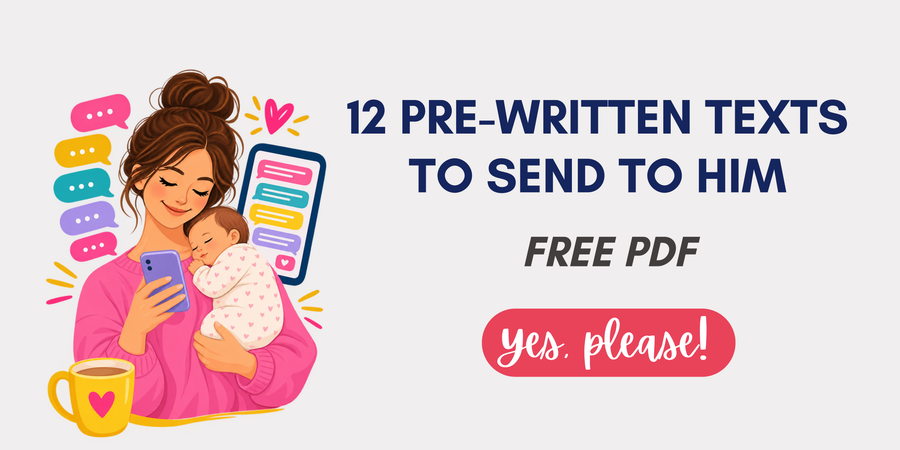
If you want something to help you right away, these 12 texts to send to him can help!
6. How to Keep Intimacy Alive (Even With Kids)
Intimacy is so important in a relationship, yet it’s often the first thing to slide when daily life and parenting take over.
And when I say intimacy, I don’t just mean the physical side, but emotional intimacy too. The two go hand in hand.
Now we know how to find time for each other, even when it feels like we have none. And how to use that time to truly connect, not just be together physically.
We now feel closer, more ourselves with each other, and more like a couple again, not just Mum and Dad.
We accept each other for who we are, and at the same time, we help each other grow.
And frankly – this is probably the sexiest and healthiest thing you can do for your relationship!
7. How to Know When a Marriage Is Over (or Shouldn’t Start at All)
Many people wonder, How do I know if my marriage is worth saving?
And it’s a fair question.
Because every relationship has rough patches.
Feeling stuck or wondering if you married the wrong person – that’s all part of a long-term relationship. It doesn’t automatically mean it’s over.
So how do you know when it is?
She helped us see which questions to ask ourselves when we’re struggling, and how to tell if there’s still hope.
But the good news is that in most cases, when you are both willing to do the work, there is.
Before vs After: How Coaching Changed Our Marriage
The most amazing thing we got from this coaching, and the thing that went far beyond our expectations, is how much closer we are now.
We didn’t even go in looking for more closeness, yet we feel closer now than ever before.
Before, we lived somewhat on autopilot. Sure, we had the occasional date night and fun times, but they were the exception. Most days revolved around the kids and regular “boring” things like shopping lists, household chores, and appointments… You know the drill.
Now we know what to do to feel close most days, regardless of what’s going on around us.
In short:
Before:
- Living on autopilot
- The same arguments, round and round
- Little things brushed under the rug
- Blaming each other
After:
- Feeling close, even on busy days
- Arguments that actually go somewhere
- Nothing left unresolved
- Trying to understand each other first
We know how to handle any misunderstanding or problem that comes our way.
And because nothing gets brushed under the rug anymore, there’s no resentment quietly building up in the background, only to come back later. That happens a lot in marriages.
For me personally, one of the biggest shifts was becoming a more compassionate wife. (I’ll be honest, compassion is something I sometimes struggle with.)
And the more I give, the more I get back from my husband too.
The goal was never to have a “perfect” relationship with no arguments. We still argue and drive each other crazy!
But we don’t get stuck anymore.
Why Every Parent Should Consider a Relationship Coach
Let’s be honest, when you become parents, your relationship changes a lot.
You’re not the same couple you were before children:
- You have less time for each other
- You’re exhausted
- Your intimate life has changed (tiredness alone can kill the mood)
- You’ve both changed as people since becoming parents
- Your priorities have shifted
- Most days revolve around the children
That’s a lot, and it takes a toll on even the strongest relationships.
My relationship with my husband was very strong before children. We were still in the honeymoon phase! But becoming parents still shook us.
I also struggled with postpartum depression, which definitely made things even harder.
There’s no shame in admitting you need help.
We all do, even at the best of times, let alone when we’re caring for little humans. That’s exactly when the relationship tends to fall by the wayside.
It’s normal, but that doesn’t make it good for you or your family.
In fact, I believe your relationship should come before children.
I also believe all parents should work on their relationship, whether that’s with a coach, a therapist or a counsellor.
Many couples think they can figure things out themselves, but most don’t. And how could you?
You can’t know something you’ve never learned or that no one has ever explained to you.
The Brutally Honest Part: What Wasn’t Easy
Now, let’s get to the not-so-fun stuff.
When you work with a coach, you will inevitably have to take a good look in the mirror.
And that’s not always fun.
I’d like to think I’m pretty good at self-reflection, but it took me years to get here.
But still, there were moments in the programme that were highly challenging – when I had to admit that maybe I was part of the problem too. (Even when I was convinced I wasn’t.)
And this is what I want you to know: if you’re not ready to look in the mirror, working with a coach might not be for you rigth now.
Being honest with yourself and keeping an open mind is absolutely crucial, not only when working on your relationship, but in anything in life.
It was also hard at times to see things from a different perspective, especially when that new perspective challenged my beliefs.
For instance, when my husband did something that made me angry, I was challenged to see the situation through his eyes. Many of us tend to blame others instead of trying to understand why they acted the way they did.
Of course we do. It’s much easier to blame than to open our minds and do the work.
All in all, this will only work if you both commit and truly want to work on your relationship.
I also have to stress that it’s not therapy. If there’s abuse, trauma or a mental health crisis, please see a qualified therapist first.
Is a Relationship Coach Online Right for You?
This coaching is for you if:
- You’re parents who feel more like roommates than lovers
- The same issue keeps coming up again and again
- You don’t feel heard or understood
- You love your partner deeply but just can’t seem to connect
- Your conversations escalate quickly or shut down entirely
- You’re a cross-cultural couple
It probably isn’t for you if:
- Your partner isn’t willing to do the work
- Mental health problems are more pressing right now
How to Get 10% OFF Melissa’s Coaching Programme
After working with Melissa, I decided to partner with her, which means you get 10% off her programme.
All you need to do is [book a free connection call here], and if you decide to sign up, mention that you heard about her from MumsJourney.
The connection call is free, and you won’t be pressured to sign up. Its purpose is for you both to see whether you’re a good fit and whether you “click”, so to speak.
And if you want to get to know Melissa’s work a bit more, check out this post where she shares how to keep your relationship alive after kids.
FAQs
If you have the right coach, absolutely! Fo us, it worked as well as meeting in person, and it was much easier to fit around the kids. It’s worth it as long as you both commit to the work.
A relationship or couples coach teaches you practical skills and tools for the future – for instance, how to communicate, listen and handle conflict. Therapy goes deeper into past experiences, trauma and mental health. If you’re dealing with abuse, trauma or a mental health crisis, see a therapist first.
The Couples Communication Cure is four weeks of intensive training, with ongoing support afterwards.
Not necessarily, as long as your partner is willing to do the work. However, for best results it’s always best if you both take part.
Yes! That’s exactly why we started. Understanding how our different backgrounds shaped the way we think and communicate was a real eye-opener for us. And acknowledging some of the differences helped me personally be much more understanding of the things I used to complain about. And vice versa 🙂
Final Word: Was It Worth It?
Working with a relationship coach was the best investment we’ve ever made in our marriage.
It’s like we now have a toolbox with everything we need whenever we hit a bump in the road.
That doesn’t mean we won’t have problems. Of course we will, and plenty more in the future. But we don’t feel stuck anymore. Whatever comes up, we KNOW what to do.
It’s not easy. Marriage is hard work, and it takes effort on both sides. But once you put that work in, your relationship can be even better than it was in your honeymoon phase.
Because in the honeymoon phase, you don’t really know each other on a deep, intimate level. So imagine having both: that honeymoon feeling and knowing each other inside out.
Trust me, it’s worth the work!
I’m sure there are many amazing relationship coaches online. I can only speak from my own experience with Dr. Melissa Cancel.
She’s been phenomenal, and I’ll keep recommending her to every couple who feels stuck. The tools are right there, waiting for you. All you need to do is grab them.
Click here to book your free call with Melissa, and don’t forget to mention MumsJourney for your 10% off.
Your next read:
Why Am I Jealous Of My Partner After Having A Baby?
How to Put Yourself First As a Mum (Without Guilt)
When Your Partner Becomes Super Dad: A Real Talk Guide for New Mums Who Feel Overlooked
Can Men Get Postnatal Depression? Signs, Causes & How to Get Help
How to get your partner to help with the baby (the ONE way that actually works)

PhDr. Ivana Poku is the author of Motherhood – The Unspoken, an award-winning blogger and maternal mental health advocate. Through her work, she is on a mission to create a world where mums feel seen, heard and supported. Ivana is also a mum of three boys, including twins, and lives with her family in a small coastal town in Scotland.