
Last Updated on September 12, 2026 by Ivana Poku
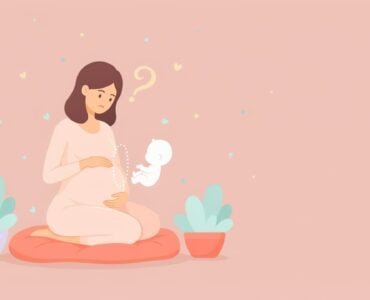
Did you want a girl and find out you’re having a boy?
Or maybe you dreamed of a boy… and reality surprised you.
If you’re experiencing gender disappointment, you probably feel confused, guilty, or even ashamed.
If your heart sank when you found out, please hear this first:
You are not a bad person or ungrateful.
And you are definitely not alone in feeling like this.
Gender disappointment is real, and it happens to more parents than people think.
You may imagine having a boy or a girl for a long time.
When you found out your baby is the other sex, you can feel sad.
Because people don’t talk about it much, it can feel like you’re the only one who feels this way.
But you’re not.
I know that because I went through it myself.
My story…
I had always imagined myself with a baby girl.
I even used to joke that I’d keep having babies until I finally had one. (ha!)
When I found out I was expecting twins, I secretly thought, “This is it. Fifty-fifty odds. Surely one will be a girl.”
When the midwife told us both babies were boys, I felt an instant sting of disappointment, sharp and unexpected.
My first thought was, What is wrong with me?
I was carrying two healthy babies with the man I loved.
What possible reason did I have to feel sad?
And yet, I did.
I had to focus very hard not to start crying right there and then, in front of the midwife.
But when the scan was over, I excused myself and went to the toilet to have a secret cry.
Although I am not sure whether I felt bad about the “verdict” or about how it made me feel.
Either way, I was extremely disappointed that we were having two boys.
At that time, it was like the worst-case scenario for me.
It took some time to adjust to the idea of having boys.
It was not easy but what made a big shift in my emotions was a comment from one of my close friends who said: ‘Wow, you will have at home three wonderful men who will love you to bits!’
This comment shifted something in me.
Slowly, my heart caught up with reality.
Today, I can’t imagine my life any other way.
In this post, I cover:
- What baby gender disappointment actually is
- Why it doesn’t make you a bad mum (or a person!)
- Practical ways to cope with gender disappointment and move forward
But before that, real quick:
If you want to discover more truths about life as a new mum no one talks about, grab my FREE guide with 9 motherhood facts I wish I knew before giving birth.
And if this is your first pregnancy, check out my guide to your first pregnancy, that covers what to expect, common symptoms, and tips to navigate it all.
What is gender disappointment?
Gender disappointment is when you feel sad because your baby’s sex is different from what you wanted.
Maybe you imagined having a baby girl, or maybe you always dreamed about having a little boy.
And when things turn out differently, you feel disappointed and upset.
This feeling doesn’t mean anything is wrong with you!
And it definitely doesn’t say anything about you as a mum or a person.
This is a normal, human reaction to when things don’t go the way we hoped.
Related posts:
- 9 Things That Surprised Me About Pregnancy (No One Talks About These!)
- Pregnancy Anxiety: What’s Normal and When to Get Support
- Pregnancy Is Not A Magical Time: Honest Truths for First-Time mums
Is gender disappointment normal – and how common is it?
Absolutely, it’s totally normal.
It doesn’t mean you don’t love your child – it just means you’re grieving a vision you had in mind.
I know it’s hard to feel that way, especially when you hear other mums say “as long as they’re healthy, that’s all that matters”.
When you hear it over and over, it’s easy to think, I’m a bad mum, because I care about the gender.
But you really aren’t. You have a real human reaction.
Often, those who claim they don’t care, try to convince themselves more than others.
So how common is it exactly?
Well, nobody knows for sure, and that tells you everything.
A psychiatry paper looked into it in 2024 and said the same thing – almost everything we know comes from women talking to each other in online forums, not from anyone actually counting.
Why?
Because who admits it?
What we do know is that having a preference in the first place is completely normal.
Gallup has asked Americans which they’d choose if they could only have one child. They’ve been asking since 1941, and the answer barely moves.
Last time, 36% said a boy. 28% said a girl.
That’s roughly two out of every three people with a preference!
And that’s about an imaginary child, in an anonymous poll, with absolutely nothing at stake.
So imagine how many feel it about a real baby, when saying it out loud actually costs you something.
You’re not rare, my darling.
You’re just one of the ones being honest about it.
I know it’s hard to feel sad, especially when you hear other mums say “as long as they’re healthy, that’s all that matters”.
When you hear it over and over, it’s easy to think, I’m a bad mum because I care about the gender.
But you really aren’t a bad mum. You have a real human reaction.
Often, those who claim they don’t care, try to convince themselves more than others.
Why am I so sad about my baby’s gender?
Because you’ve been picturing your baby for a long time, and you pictured a specific gender.
There’s nothing wrong with having a preference! (Remember, two out of three people have one.)
And when reality turns out differently, you can feel surprised or sad at first.
It doesn’t mean you don’t love your baby, only that you need some time to adjust to the new idea.
Nobody warned you this was possible
One of the reasons you may feel confused about your sadness is that no one told you it could happen.
Nobody said: Hey, by the way, if it’s not the gender you wanted, you may feel sad. And you may even cry!
So when it does happen, you have no clue what to do, and whether it’s even allowed.
That’s why the first thought is almost always What is wrong with me?
I had it too.
And sometimes it isn’t even your sadness
Now, I can’t not mention this one.
Ask yourself honestly: Who wanted this baby to be a girl (or a boy)?
Was it you, or your mum, or your husband, who’s joked about a boy for football since you started dating?
My point is, sometimes you’re carrying a disappointment that was handed to you.
If this is the case, you’re allowed to hand it straight back!
How long does gender disappointment last?
Personally, it took me a few weeks to get used to the idea to have boys.
But that’s not a rule.
For many mums, disappointment fades during pregnancy, while for others, it can linger even after birth.
But for the majority, it goes away naturally within weeks.
Here are a few tips that can help you speed it up:
How to get over gender disappointment (this actually works)
Here are the steps that helped me start feeling excited about my twins being boys instead of girls:
1. Allow yourself to grieve
First, don’t be hard on yourself.
In pregnancy, your mind and body go through so much so anything you feel is normal and understandable.
Don’t try to push your feelings away or ignore them.
When you do, they come back later and stronger.
Instead, allow yourself to feel sad.
Let yourself feel it fully.
Remember, this feeling is normal and natural and there’s no reason to feel bad about it.
When you accept it, little by little, your heart begins to adjust.
2. Talk to someone
Shame and guilt thrive in silence, so talk to someone you trust – a friend, partner, or another mum (she is often the best person to understand).
Or you can ask other parents in online groups and forums – just make sure you choose the right group that’s supportive, as some of them can be nasty.
You’ll be surprised how many parents admit “Me too.”
Talking helps you feel less alone and ease the sadness.
3. Shift expectations
Grab pen a paper, turn your brain off, and write what’s on your mind without editing yourself.
Journaling helps uncover the why behind the sadness.
You can try these powerful journaling prompts:
- Why am I feeling sad about the sex of my baby?
- What does it mean that I am feeling sad?
- Do I want to feel differently about it?
- What can I do to feel differently about it?
Do it right now.
If you don’t have a pen, just close your eyes and answer at least one question in your head before you keep reading.
I promise, this alone will shift things for you.
Extreme or severe gender disappointment
Ok, now let’s talk about if it has been weeks and you:
- still feel very upset
- cry more than you’d want to
- doubt what you feel is normal anymore
Because there’s a difference between feeling flat for a few days and feeling deep sadness to your core.
This can look like:
- You cried for days, not hours
- You can’t look at the scan photos
- You feel sick when someone congratulates you
- You thought about cancelling the gender reveal (or you did)
- You feel numb instead of sad
- Nobody knows why you feel how you feel
If most of these are you, don’t worry – nothing is wrong with you.
You’re grieving.
Why it can feel this big:
When you imagine having a daughter or a son, you don’t just imagine a baby.
You’ve basically already watched the whole movie:
- First day of school
- Borrowing your clothes
- Their wedding day
You watched all of it, for years, before anyone told you the sex of your baby.
And then a sonographer ends it.
Of course it hurts.
There’s usually something underneath
When the feeling is this strong, it can be for many reasons.
Here are some of them:
- This is your last baby and the door has closed
- You had a loss before this pregnancy, or a long road to get here
- You grew up wanting the relationship you never had with your own mum
- You’ve been imagining this for years, not months
When you work out what’s really behind your sadness, that itself can help massively.
Because then you can see what you’re really grieving.
And it’s almost never your baby.
If your sadness is too strong, it can also be a sign of prenatal anxiety or depression. I’ll talk about it more in a minute.
Gender disappointment with a second girl (or boy)
Now, let’s talk about the disappointment with a second child.
For instance, you found out you’re having another boy and your stomach drops.
And then you tell yourself off, because “as long as they’re healthy….” and all that.
And underneath all of it, there might be an ever quiter thought…
“I’m never going to have a daughter.”
Ouch.
If you really wanted a girl and you know you don’t want more than two, the sadness can be even deeper than with the first.
Because now you can count.
It stops being “I’m having a boy” and turns into “I will never have a girl.”
That’s not disappointment, that’s a proper loss.
And you’re allowed to grieve it!
The guilt is worse this time
Here’s the hardest part though.
When you already have children, the guilt doesn’t only point at the baby.
Let me explain.
You watch your older son playing on the floor and think: Does he know? Will he ever find out I wanted something different?
If this is you, please hear me out:
Wanting a daughter has never once meant wanting your son less.
Those are two completely separate things. Your younger son will only notice and care about how you see him, not what could have been.
And then there are the comments
Personally, I didn’t experience gender disappointment with our third son. By that time, I wanted three boys. But the comments from people were shocking:
“Oh no, another boy!”
“Ooh, are you going to try for a girl next?”
“I’m so sorry.”
The last one still makes my blood boil.
Now, it was bad as it was but if I was actually sad about not having a girl, such comments would feel like a stab in an open wound.
What I wish someone had told me
As I said above, the thing you’re actually grieving isn’t a gender. Is what you think this gender represents.
For instance, if you wanted a girl, you may have wanted someone to:
- do girly stuff together
- ring you for no reason
- go shopping with
And believe when I say that you can still have all that – and much more!
More than you can possibly imagine.
For instance, it’s so true that boys are mummy’s boys! I see it every day and I love it! I also love it how caring and protective of me the boys are. That’s impossible to not enjoy. I already can’t wait for the care I get when I’m retired and old lol.
Of course, having girls have so many benefits too. Neither gender is better or worse.
Whatever you have, you will have the best time with them! And you won’t be able to imagine having it any other way.
That’s a promise!
One more honest thing
The sadness might not disappear completely, and you may still get a small pang at somebody’s wedding when you’re sixty.
That’s allowed too!
It doesn’t mean you love your children any less, it means it mattered to you.
And that’s more than okay!
Gender disappointment at birth and after birth
Some mums don’t want to know their baby’s sex before birth, and can experience disappointment in the delivery room.
Or it can even catch up after birth, when the baby is a few months old.
Again – both are normal and happen very often.
Let’s take them one at a time.
When you find out at the birth
Everybody promised you that you won’t care at all the second you hold them.
So when it doesn’t happen, it can make you feel incredibly guilty.
I think that broken promise hurts almost as much as the disappointment itself – if not more. Because now you’re not just sad, now you’re “the one person” it didn’t work on.
If the airquotes didn’t make it clear – you’re not!
I want you to think about what was really going on in that room:
Your body had just done the hardest thing it will ever do
You’re beyond exhausted
Your hormones were about to drop off a cliff
And in the middle of all that, somebody handed you a surprise you’d had no time to prepare for
The mum who found out at her 20-week scan had months to get used to the idea.
You had about four seconds.
When looking at baby photos hurts
Many mums who experienced gender disappointment at or after birth, often can’t even look at the first photos.
That they can see the disappointment in their own face.
But listen my darling, it’s ok if you felt sad in that moment. It was just a fleeting moment in your baby’s life and your journey together.
Don’t give it more meaning and attention than it deserves.
You can tell yourself something like, “That’s how I felt in that moment, and that’s ok. I don’t feel like it now” or “I won’t feel like this forever” if the sadness still lasts.
When it’s still there months later
Gender disappointment doesn’t come with a deadline.
Some mums feel completely fine by the time the baby arrives, and then it turns up again at six months, out of nowhere.
Maybe at somebody else’s gender reveal, or in a shop, when you see tiny pink dresses.
If that’s you, it usually means you never got to say it out loud at the time.
Feelings you don’t get to speak don’t go anywhere.
So say it now. To anyone – your partner, a friend, another mum, your GP…. or email me.
When your partner feels it too
Sometimes your partner can be sad as well and this bit matters a LOT.
Men often feel it more than they let on, but dads get gender disappointment too.
Although it’s much easier for them to admit, let alone talk about it.
Everyone jokes about the dad who wanted a boy for football but a man who is genuinely sad, saying it out loud?
That takes more than courage.
So it comes out sideways:
- He goes quiet
- Maybe he makes a joke and changes the subject
- Or he throws himself into work
If he’s disappointed, it’s not about you!
I have to say this in bold letters because many mums feel like they failed him in a way.
Like you were meant to deliver something and didn’t.
If this is you, please please get rid of that though right now.
And remember that the sex of your baby is decided by your partner’s side, not yours.
Not that it’s anybody’s fault! But if someone in the family has been making comments, now you know.
If you’re both sad at the same time
If both of you’re grieving, you can’t hold each other up.
So take turns.
One of you talks tonight, the other one tomorrow. It sounds silly, I know, but it really works.
And please, don’t let it become the thing you avoid, either. Feelings you both hide turn into resentment and tension, and that’s the last thing you need right now.
When your partner doesn’t understand you
Of course, in some cases, partners don’t understand when you’re going through gender disappointment.
He may say, “I don’t get what the problem is”.
I know this sounds like he’s dismissing you, but most likely, he isn’t.
He’s trying to fix it.
That’s what he does when you’re upset, and he honestly thinks “but the baby is healthy” is a helpful thing to say.
It’s not his fault, it’s just how their brain works – they want to fix the problem.
So the best thing you can do is stop assuming, and tell him what you actually need:
“I don’t want you to fix this. I just need you to listen without saying anything.”
Most men can do that, they just need somebody to tell them that’s the job.
(I know\… but they’re really wired that way lol.)
However, if your partner is blaming you, punishing you, or making you feel this is somehow your fault – that isn’t gender disappointment any more.
That’s something else, and you definitely shouldn’t be managing it on your own.
When gender disappointment becomes depression or anxiety
How do you know when it’s stopped being disappointment and turned into something else?
Here’s the simplest way I can put it.
Gender disappointment is about one thing, depression spreads.
Let me explain:
While the sadness is still about your baby’s sex, that’s disappointment – however heavy it feels.
But when it starts leaking into everything else – into food, sleep, seeing people, how you feel about yourself – that can be something more serious.
Signs worth paying attention to
If months go by and you don’t bond with the baby, or feel heavy guilt or shame, please don’t wait another day and reach out for help.
Same goes if you notice:
- The sadness has spread to things that have nothing to do with your baby
- You’ve stopped doing things you used to enjoy
- You feel numb more than you feel sad
- You can’t picture ever feeling happy again
- You believe that your family would be better off without you
All of these could be early signs of postnatal depression or postpartum anxiety.
Both are really common, and I’ve had both too.
What stops most mums from seeking help
I know that asking for help is much easier said than done.
The thought of someone writing “struggling to bond” in your notes is not exactly pleasant.
What if they’ll decide you’re a bad mother? What if it’ll follow you around for years?
I totally get it. I put off asking for help far too long for exactly those reasons.
But take it from me: your midwife, health visitor or doctor has heard this before. Many, many times. Their job is to get you support, not to judge you.
And every mum I know who finally said it out loud tells me some version of the same thing: I wish I’d done it earlier!
You don’t need a diagnosis to get help
Now, this one surprises many people.
You don’t have to be in deep depression to get help.
You’re allowed to go simply because this is heavy, and you want somewhere to put it that isn’t your partner or your best friend.
That’s a good enough reason on its own! And you definitely won’t be the first or the last.
Plenty of mums have a handful of therapy sessions about exactly this and never go back.
So even if none of the signs above fit you, speak to someone anyway.
Getting help will help you feel much lighter, and prevent things from getting (much) worse.
You’ve carried this for long enough, my darling.
It’s time to get better!
Final word
Your feelings are valid!
Baby gender disappointment does not define you as a mum, or as a person.
You’re doing an amazing job and everything is okay.
With time, honesty, and support, your heart will catch up.
And one day, you look back, and realise the story unfolded exactly as it needed to.
Before you go…
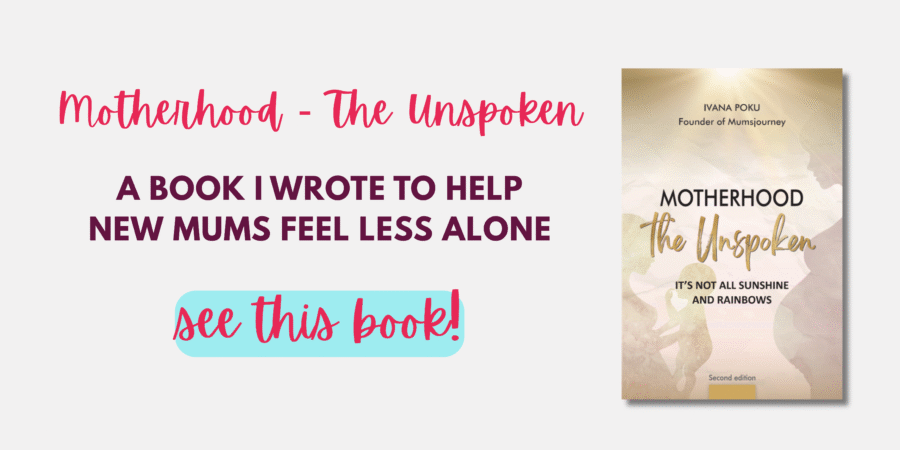
If this post made you feel understood, there’s more support waiting for you in my book Motherhood – The Unspoken.
Inside, you’ll find:
- Real stories from different first time mums
- The innermost thoughts & challenges they faced during pregnancy and early motherhood
- How they coped with difficult moments and emotions
- Lessons they wish they could tell their past selves
- Support, encouragement, and word of advice to you
FAQs
Yes, for most parents it does go away within a few weeks. Allow yourself to feel sad and give it time. It’s never a bad idea to get some extra help and support though. Talk to someone you trust about how you feel. I promise it will take a huge weight off.
It’s a phrase people use online, but it isn’t a real diagnosis. No doctor will ever tell you that you have gender disappointment syndrome. It’s simply another name for the sadness you feel when your baby’s sex isn’t what you hoped for.
The same way I did! Let yourself be sad first – the feeling loses its power much faster when you stop fighting it. Then give it time and think about all the things you get with a boy that you definitely wouldn’t with a girl. My favourite thing is that boys are mummy’s boys. And they LOVE and protect their mums to death.
Mostly, yes. Some mums prefer “gender grief” because it’s more honest – disappointment sounds like missing out on a table at a restaurant, when what you’re actually doing is mourning a child you’d already pictured. Grief is a much fairer word for it.
Whatever you do, don’t say “at least the baby’s healthy”. That’s a big no-no as it only adds shame to what she’s already carrying. Try “that sounds really hard – do you want to talk about it?” and then listen without trying to fix anything. Believing her is the whole job.
Yes! Some parents still feel a bit sad about their baby’s sex even months or years later, especially if they didn’t talk about it or work through their feelings before. It’s never too late to understand your feelings and get help.
Your next read:

PhDr. Ivana Poku is the author of Motherhood – The Unspoken, an award-winning blogger and maternal mental health advocate. Through her work, she is on a mission to create a world where mums feel seen, heard and supported. Ivana is also a mum of three boys, including twins, and lives with her family in a small coastal town in Scotland.