Last Updated on September 3, 2026 by Ivana Poku
If you’re struggling with postpartum depression (or you think you might be), let me start by saying this:
You. are. not. alone.
As a mum of three, and a PPD survivor myself, I know all too well how lonely and terrifying this illness can be.
And it doesn’t have to look dramatic from the outside.
You may look like you’re coping just fine, but on the inside, you’re breaking.
I know, my lovely.
And you’re in the right place.
Because I am here to tell you that even though it’s very hard (almost impossible) to believe it right now, there is light at the end of the tunnel. You will get through this, and you will be happy again.
In this post, I will share a few options that will help you get there.
Not the vague advice like “look after yourself” or “sleep when the baby sleeps”, but specific ways, from lived experience, on postpartum depression and treatment options.
But first hello!
I’m Ivana, a mum of three boys (including twins), the founder of MumsJourney, and author of Motherhood: The Unspoken, on a mission to create a world where mums feel seen and supported.
After having our twins in 2016, I had severe postpartum depression. It was the worst time of my life I don’t wish on anyone. But it also helped me realise how many (new) mums struggle in silence.
Once I pulled through PPD, I made it my mission to make a difference so no mum ever has to feel like I did.
In this post, I cover proven ways to help you:
- Lift the heaviness off your chest
- Stop feeling so hopeless and lonely
- Feel better (happier) day by day and like yourself again
- Enjoy your baby more
Let’s dive in.
What is postpartum depression?
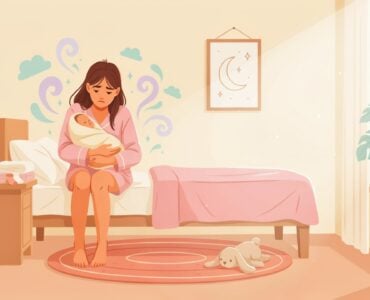
Postpartum depression is a type of depression that can happen after having a baby.
The figure is that it affects more than 1 in 10 mums, but these numbers only reflect reported cases.
There are many mums whose PPD was never diagnosed, so the real number is likely much higher.
Postnatal depression has nothing to do about how much you love your baby or what kind of parent you are, and it can happen anytime in the first year of having a baby.
It can make you feel:
- very low and hopeless
- numb
- overprotective
- empty
I share more PPD symptoms in the post Postnatal depression signs and symptoms.
A lot of mums (including myself) don’t realise that they have it. They think they are failing, when in fact they are dealing with a illness that needs to be treated.
I explain in more detail what PPD is in my post What is postpartum depression? Everything you need to know.
You may also come across the term postpartum depression ICD-10 when researching the condition. This refers to how postpartum depression is classified in the ICD-10 system.
What does postpartum depression treatment actually mean?
When you hear the word treatment, it may sound too serious and clinical.
It can feel scary and something to avoid.
But with postpartum depression, treatment simply means support that helps you feel like yourself again.
This is not something you can fix through willpower alone.
PPD is an illness and it needs to be approached as such.
Sadly, the society still has a long way to fully understand this so some people can make you feel that it’s a sign of weakness or something wrong.
But I am here to tell you to not listen to them. It’s not their fault, no one simply explained this to them properly.
This is about you and your family.
If you have PPD, or you think you have it, it needs to be treated. Full stop.
I am sure you wonder how long it will take to feel better, but I’m afraid no one can give you a clear answer to that.
But what I can tell you is that there are things you can make to start feeling better as soon as possible.
We’ll look at them in a minute.
You may also like:
- How I Recovered From Postnatal Depression (And How You Can Too)
- How to Help a Mum With Postpartum Depression (From a Mum Who’s Been There)
- How Long Does Postnatal Depression Last (And Will It Ever Go Away?)
- Postnatal Depression 6-9 Months After Birth: Why It Can Appear Later Than You Think
How healing from postpartum depression looks like
First, let’s talk about how healing from PPD actually looks like.
Because so many mums get it wrong and have rather unrealistic expectations.
And even when they are on the right path, they don’t recognise it and go 100 steps back.
So, here’s the thing: when you’re recovering from postpartum depression (or any mental health illness), there is no finish line you cross.
It’s not like a cold, where you clearly know you have recovered.

Postpartum depression is more complex than that.
It also doesn’t heal overnight in a big way.
It’s about daily steps that make you feel slightly better in the moment.
Even if it’s only a tiny bit better, it still counts and builds over time.
For instance, you go for a walk and feel better afterwards than you did before. Don’t dismiss it as irrelevant or “small.” Instead, ask yourself: what else can I do to feel a bit better?
Is it asking for help with daily chores? Talking to a friend? Going to a local baby group? Spending 10 minutes doing something you love? Whatever it is, do it.
And make this your new daily pattern.
Healing won’t happen loudly. One day, you simply wake up and realise that you haven’t cried or felt the heaviness on your chest for a while.
This is what healing looks like.
Now, let’s take a look at the treatment options.
Treatment options for postpartum depression:
1. Talk to someone you trust
I know you’ve heard this many times before.
You know that speaking up helps… but if only it was that easy, right?
It can feel really hard to open up, especially when it means talking to a complete stranger or even your loved ones about feelings you feel ashamed of.
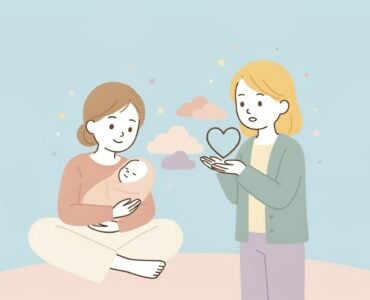
So what I suggest you do is choose one person you trust and know will support you.
Often, this may not be your parents, as they can be too emotionally involved and might not respond in the way you need right now.
You probably already know who that right person is.
So talk to them about how you feel.
I don’t mean just the surface-level stuff, but what’s really going on in your heart and mind.
This alone can be incredibly empowering and healing, and it can also lead to other sources of help and support.
If reaching out feels too hard, my “Ready-to-send” messages can help.
If you don’t know who to turn to, organisations like the PANDAS Foundation (for parents in the UK) or Postpartum Support International (for parents in the US) can also help. They offer free support specifically to parents with perinatal mental health problems.
2. The right therapy (not just any therapy)
Once you open up to the person you trust, you can ask them to help you reach out for professional support.
Therapy is very effective, but only if it’s the right therapy and the right therapist for you.
Not all therapists will be able to help you in the way you need.
So do your research and ask around.
Ideally, you want someone who has experience supporting mums with postpartum depression or similar struggles, so they truly understand what you’re going through.
As for therapy itself, there are so many options to choose from:
- Talking therapy: a safe space where you speak openly with a trained professional and feel truly heard without judgement.
- CBT (Cognitive Behavioural Therapy): a type of talking therapy that helps you become aware of unhelpful thoughts and gently change them into more supportive ones.
- Support groups: extremely effective for feeling less alone and reducing guilt and shame.
- Psychophonetics: focuses on connecting body, voice, and emotional expression.
- EMDR (Eye Movement Desensitisation and Reprocessing): especially effective for traumatic experiences, such as a traumatic birth.
- Hypnotherapy: many mums use it for anxiety, sleep, or emotional regulation.
- IPT (Interpersonal Therapy): very effective for postpartum depression; it focuses on relationships, role changes, and identity shifts after becoming a mum.
- Psychodynamic therapy: explores past experiences that may be influencing how you feel now.
3. Medication (to help you function)
For more serious cases of postpartum depression, where it impacts your daily life and your ability to function, medication can be essential.
It doesn’t “cure” you, but it helps balance chemicals in your brain so that you can function and feel more like yourself.
Without this support, any other form of treatment can feel extremely hard, if not impossible.
So if you feel like PPD is taking over, speak to your GP as soon as possible.
This is not the time to be a superhero and try to push through without help. This is about your and your baby’s safety.
Don’t worry, it won’t make you addicted, and it won’t change who you are.
It simply creates space for you to start healing.
Speak to your doctor or GP, who will talk you through safe options, especially if you are breastfeeding.
4. Self love and compassion
When we struggle, we often talk to ourselves in a very harsh way.
It may sound strong, but think about it.
“I’m a horrible mum.”
“I shouldn’t feel like this.”
“I’m not enough.”
“I’m failing.”
“My children deserve better.”
Sounds familiar?
If you spoke to someone else like this, it would be emotional abuse.
Yet when we speak to ourselves this way, it somehow feels normal.
But it’s not.
The more hate you show yourself, the deeper the feeling of hopelessness becomes.
So starting right now, I want you to gently stop self-criticism and start speaking to yourself with love and compassion.
When you catch yourself thinking negatively, pause and replace it with something kinder and more realistic.
For example, if you think, “I’m not enough,” stop that thought as soon as you become aware of it, and reframe it as: “I don’t have evidence that I’m not enough. No one has told me that. It’s just something I decided for myself. I am more than enough because__________.”
If you practice this regularly, you will feel so much better very quickly – not just with your depression, but with how you see yourself and life in general.
Final word
There you go!
I really hope this post helped you understand your options for getting better from postpartum depression and gave you a bit more confidence to reach out for help.
As a mum who has been there, I want to say this clearly: speaking up is the most important thing you need to do to recover from postpartum depression.
Even if you only remember one thing from this post, let it be this.
Depression thrives in silence. So whether you talk to a friend, a family member, or go to a local baby group or support group, speaking up can make all the difference. It can help you in ways you might not even expect right now.
If you’re supporting someone with PPD rather than experiencing it yourself, I’ve also written a guide on how to support a mum with postpartum depression.
Your next read:
- Postnatal Anxiety Explained: Why You Feel Constantly On Edge After Birth
- 10 Postpartum Depression Signs and Symptoms (What No One Tells You)
- Why My Postnatal Depression Was Never Diagnosed
- Are Antenatal Classes Contributing to Postnatal Depression?
- Can Postnatal Depression Go Away On Its Own?

PhDr. Ivana Poku is the author of Motherhood – The Unspoken, an award-winning blogger and maternal mental health advocate. Through her work, she is on a mission to create a world where mums feel seen, heard and supported. Ivana is also a mum of three boys, including twins, and lives with her family in a small coastal town in Scotland.