Last Updated on August 21, 2026 by Ivana Poku
If you’re struggling with postnatal (postpartum) depression, you’re probably asking yourself:
“How long will this last?”
I asked myself the same questions after I had my twins.
When you’re in the thick of it, it often feels like it’s never going to end.
Days feel too long, hope feels out of reach, and you don’t see any light at the end of the tunnel.
The good news is that postnatal depression does not last forever.
How long it lasts depends on many different factors. It can last a few weeks or months, and in some cases, it can continue for longer without the right support.
In this post, I cover:
- what is postnatal depression (PPD)
- how long does PPD last
- what affects recovery
- how to know when it’s time to seek support
If you’re new here, I’m Ivana – a mum of three boys, the founder of MumsJourney, and author of Motherhood: The Unspoken, on a mission to create a world where mums feel seen and supported.
After having our twins in 2016, I had severe postnatal depression. Once I pulled through PPD, I made it my mission to make a difference so no mum ever has to feel like I did.
Now, let’s take a closer look at what postnatal depression is and how long it can last.
What is postnatal depression?
Postnatal depression is a type of depression that can happen after having a baby.
The figure is that it affects more than 1 in 10 mums in the first year, but these numbers only reflect reported cases.
There are many mums (and dads) who struggle in silence, so the real number is likely much higher.
Postnatal depression has nothing to do about how much you love your baby or what kind of parent you are.
It can make you feel:
- very low and hopeless
- numb
- overprotective
- empty
I talk more about signs of PPD in the post Postnatal depression signs and symptoms.
A lot of mums (including myself) don’t realise what they are going through at first. They think they are failing, when in fact they are dealing with a illness that needs to be treated.
I go deeper into this in my post Everything New Mums Need To Know About Postnatal Depression.
How long does PPD last? (postnatal depression timeline explained)
There is no fixed timeline for recovery – every mum’s experience is different.
Some mums recover within weeks, others struggle for months.
And without support, postnatal depression can last a year or even longer.
So if someone has struggled for a long time, it doesn’t mean you will too.
Related posts:
- How I Recovered From Postnatal Depression (And How You Can Too)
- How to Help a Mum With Postpartum Depression (From a Mum Who’s Been There)
- Postnatal Depression 6-9 Months After Birth: Why It Can Appear Later Than You Think
- Everything new mums need to know about postpartum depression
- Postnatal Depression and Psychosis: How to Tell the Difference?
When postnatal depression lasts for years
In some cases, postnatal depression can last for years.
Thankfully, this is less common and happens mostly when mums:
- don’t recognise the signs
- struggle in silence
- don’t get the support they need
- don’t realise what they’re going through
- feel ashamed or hope the feelings will go away on their own.
What affects how long postnatal depression lasts
How long postnatal depression lasts depends on several things:
1. How quickly you get support
The sooner you speak to someone and get help, the sooner recovery can begin.
2. How severe the symptoms are
Mild symptoms can improve more quickly, while more serious symptoms (such as suicidal thoughts or if you’re unable to function) often take longer to recover from.
3. Support network
If you have people around you who listen, help, and understand, it makes a huge difference. Feeling alone makes everything heavier and last longer.
4. Sleep
Severe sleep deprivation can make symptoms feel worse and make recovery last longer.
5. Life circumstances
If you go through a stressful life event or struggle with anxiety, it can affect how you feel and how quickly you recover.
6. Past mental health history
Past mental health struggles can play a part too. For instance, I had gone through a messy divorce only a year before my twins arrived. I wasn’t fully mentally healed at that point, so I believe this may have contributed to how I experienced postnatal depression.
How long did my postnatal depression last?
When people ask me how long my PPD lasted, the truth is, I’m not sure.
There is no finish line you cross.
One day, I simply woke up and realised I was feeling good.
But roughly, it lasted around 9 months.
The very first step that helped me was stopping hiding how I felt. If I’d done it earlier, I would have recovered sooner.
Once I opened up to more people, started to treat myself with more love and compassion, started taking antidepressants, getting out more, and showing myself more love and compassion… it all fell into place gradually, like pieces of a puzzle.
What you need to aim for is to feel better in the moment. Full recovery is not possible in one day, so aiming for that can be overwhelming and add more stress.
I felt a huge sense of relief when I opened up to a friend and she showed me great support. I wasn’t fully recovered yet, but the relief was huge. I suddenly saw the light at the end of the tunnel.
This is exactly what I want you to focus on.
Because you are no longer drowning.
I talk about it more in the post How I recovered from Postpartum depression (and how you can too).
Signs that postnatal depression is improving
If you experience any positive emotion or even a small sense of relief, that’s a sign you’re on the right path.
Even if it’s only for a few minutes a day, it still counts.
If you feel low, you can’t expect to beam with happiness right away.
Big changes happen through small steps.
For instance, if you’ve always loved singing and you haven’t sung for months because of depression…. and suddenly find yourself singing in the shower one morning, it can be a sign that you’re getting better.
Or if you start feeling more positive or hopeful throughout the day.
It’s subtle but it is happening.
Keep focusing on the small steps. They are the building blocks of the bigger one.
When to seek help
If you’re struggling in any way, that’s a reason to seek help.
Don’t wait for things to get worse or try to work out whether it is PPD or not.
It’s not your job to diagnose yourself – your job is to look after your wellbeing and make sure you and your baby are safe.
So if you’re not feeling well, seek help today.
Ideally, speak to your GP, doctor, or a mental health professional. But I know that’s often easier said than done, so you can start by talking to a friend or a family member you trust and who will support you.
If you’re feeling overwhelmed, anxious to the point of panic, or unable to care for your baby safely, reach out for urgent support.
Here are some helpful contact information:
Mums in the UK
Emergency services
- 999 – ask for an ambulance or police
- You can also go to your nearest A&E department
Crisis lines
- Samaritans – Call 116 123 (free, 24/7)
- NHS 111 – Call 111 and choose the mental health option if available in your area
- Shout – Text SHOUT to 85258
Mums in the US
Emergency services
- Call 911
- Or go to the nearest emergency room
Crisis lines
- 988 Suicide & Crisis Lifeline – Call or text 988 (24/7)
- Crisis Text Line – Text HOME to 741741
Can you recover fully from postnatal depression?
I know from personal experience that you absolutely can recover from postnatal depression.
However, it’s important to look after your mental health even after you start feeling better.
Mental health is the same as physical health. You need to take care of it, even when you’re feeling well.
Otherwise, it could come back later in some form.
Personally, although I fully recovered from PPD, my mental health still needs care and attention.
I know that if I stopped looking after my mental health, I could struggle again.
Recovery is possible, but looking after your mental health should never stop.
Final thoughts
There you go!
I hope this post helped you understand how long postnatal depression lasts, and what you can do to recover.
The most important thing to remember is that you won’t feel like this forever.
I know this because I once believed I would never feel happy again.
Yet, here I am having three amazing boys, feeling happier than ever before.
Before you go…
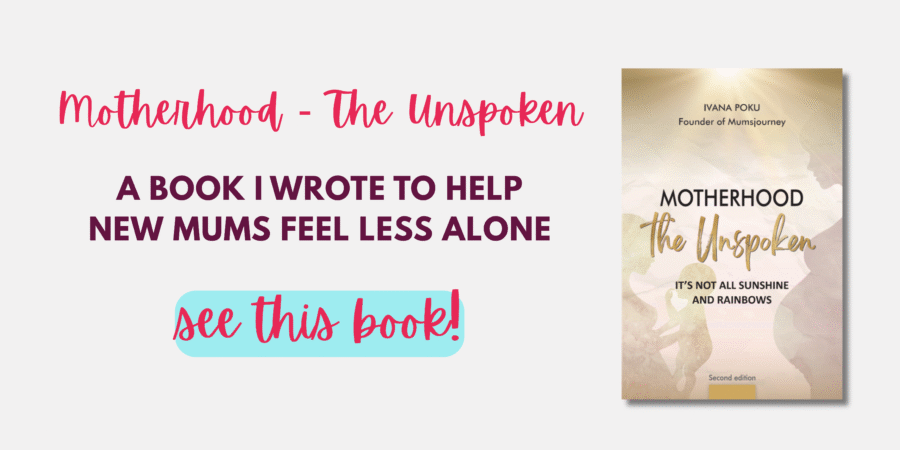
Check out my book Motherhood – The Unspoken that I wrote after I pulled through PPD and realised how many mums struggle like I did.
In the book, I share the real unfiltered side of life as a new mum, plenty of reassurance and lots of useful tips I wish someone had given me when I became a mum.
FAQs
1. How long will postpartum depression last?
2. Can postnatal depression go away on its own?
Mild postnatal depression can sometimes get better on its own. But more serious cases that affect your daily life usually need help from a doctor. This can be therapy, medicine, or both. Always talk to a doctor if you’re worried.
3. Can it last years?
Yes. If postnatal depression is not treated, it can last for years. This doesn’t happen often, but it shows why getting help early is really important.
4. What is the fastest way to recover from postnatal depression?
The fastest way to feel better is to talk about it and not hide it. Get help from a doctor, but also lean on people you trust like friends, family, or other mums. Having support around you makes a massive difference.
5. How do I know if I’m recovering?
If you feel even a little bit better than last week or last month, that’s a very good sign. Recovery happens in small steps, not all at once, in a big dramatic way.
6. What happens if postnatal depression is left untreated?
Postnatal depression is a serious illness. If you don’t get help, it can make you feel very low, hopeless, and unable to cope. In severe cases, it can become life-threatening, which is why getting support early is so important – for both you and your baby’s safety.
7. Can you fully recover from postnatal depression?
Yes. You absolutely can fully recover from postnatal depression. But it’s important to keep looking after your mental health even when you start feeling better, so you stay well.
8. When should I see a doctor for postnatal depression?
You should get help as soon as you start feeling not okay. Don’t wait until it gets “really bad”. If something feels wrong, that’s enough reason to talk to someone.
Your next read:
- How I Recovered From Postnatal Depression (And How You Can Too)
- How to Help a Mum With Postpartum Depression (From a Mum Who’s Been There)
- Postnatal Depression 6-9 Months After Birth: Why It Can Appear Later Than You Think
- 5 Postpartum Depression Signs and Symptoms No One Talks About
- Postnatal Depression and Psychosis: How to Tell the Difference?

PhDr. Ivana Poku is the author of Motherhood – The Unspoken, an award-winning blogger and maternal mental health advocate. Through her work, she is on a mission to create a world where mums feel seen, heard and supported. Ivana is also a mum of three boys, including twins, and lives with her family in a small coastal town in Scotland.