Last Updated on September 3, 2026 by Ivana Poku
We’ve all heard about postnatal (postpartum) depression.
But only a few of us really understand it.
Only those who’ve had personal experience with it – or whose loved one did – know:
- How it feels
- What it does to your thoughts
- How you’d know if it was happening to you right now
Which is terrifying when you think about it.

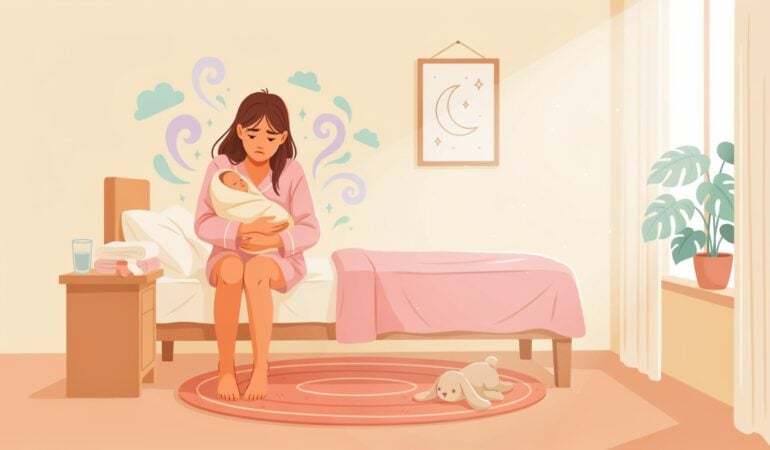
Postnatal depression (or PPD) is a severe, life-threatening illness and one of the leading causes of maternal suicide. And yet new mums walk out of hospital with a car seat, a leaflet, and no real idea what’s coming.
So when it hits, they don’t recognise it.
They just feel like they’re failing.
I was one of those mums (more on that in a minute).
As a PPD survivor, I kept wondering:
- Did other mums know?
- Did anyone warn them?
- Did they spot the signs when it started?
So I asked PPD survivors in my community one simple question: “What did you know about PPD before you had it?”
The answers shocked me (yet not really).
In this post, I’m sharing real answers from real mums about what they knew about postnatal depression before it hit them. Some knew nothing, some knew a lot – and still didn’t see it coming.
And at the end, I’ve pulled together the signs almost all of them missed.
Let’s begin.
Related posts:
- What is postpartum depression: Everything you need to know
- 10 PPD signs & symptoms (what no one tells you)
- How to help a mum with postnatal depression
A little backstory
I’d been informed about postnatal depression when I had twins in 2016.
I knew that:
- It existed
- It was a severe illness that affected 1 in 7 new mothers (I didn’t know back then that PPD could affect new fathers too)
- It was important to seek help
Yet when it happened to me, I had no idea it was PPD. I just felt like I was failing on all counts.
When I didn’t feel that instant bond with my babies, when I didn’t enjoy “every moment”, when I longed to turn back time, even when I got suicidal….
Not once did it occur to me that these could be signs of PPD. I believe I even showed signs of postpartum psychosis, although it was never diagnosed.
You can read my full PPD story in this post or in my book Motherhood – The Unspoken.
It was only when I started to feel better that I realised what I’d been dealing with.
Isn’t that crazy?
And what’s even crazier is that my story isn’t special. Far too many new mums feel exactly the same way and beat themselves up for something that is not their fault.
I truly believe that proper education about life after baby and postpartum mental health could dramatically reduce the risk of PPD and other postnatal mental illnesses.
So let’s take a look at what that education actually looked like for real mums.
I’m only sharing a handful of quotes here, but I’ve heard this same story so many times.
I’m not exaggerating when I say that most PPD survivors had an experience just like these.
12 Postnatal Depression Survivors Share What They Wish They’d Known About PPD
- ‘I literally knew what TV told me. My impression was that it was moms with hormonal imbalances that pretty much would do anything not to be a mom. The first place I ever heard about this was Scrubs. I was so misinformed and all I knew was I didn’t feel right seconds into holding my child.’ – Heather
- ‘I had very little knowledge of it so it hit me so hard! I was a super positive and out-going person so I never thought I would have PPD. I didn’t know I had PPD until almost 6 months postpartum.’ – Ellen
- ‘I heard about it and knew the symptoms, however, I STILL don’t fully understand how it directly affects the brain and is it anxiety that causes the intrusive thoughts, or is it that separate. Therapists have all given me different explanations.’ – Shannon
- ‘I’d heard of PPD before — from Brooke Shields, and later from Hayden Panettiere. But I thought it only happened right after birth. No one ever told me it could strike anytime in the first year.After my daughter was born, I felt great for the first three or four months. I thought I was in the clear. Then, around month five, the depression hit. I tried my usual coping strategies, but it spiralled fast — so fast that I ended up in the hospital because I was a danger to myself and my daughter.Another myth I wish I’d known? You can breastfeed while taking antidepressants.’- Katie
- ‘I had no idea what PPD was. My daughter was born prematurely, and I blamed my sadness and guilt on that. She had colic, screamed for hours, and I had a 19-month-old to care for too. I’d set her down, go to another room, cry my eyes out, and try to pull myself together so I wouldn’t hurt her.I wanted to run away. I thought about ending my life. Until you’ve been there, you can’t understand how a mum who knows nothing about this condition could completely break.In the NICU, they showed a video on shaken baby syndrome, so I knew to put her down and walk away. But a video or talk about PPD? That could have saved me. I waited far too long to get help.’ – Julie
- ‘I actually knew quite a bit about it because I’m a Registered Nurse who works in mental health. However…I think partially because of my job, I never thought it would happen to me. I was also under the impression that it really only happens with your first baby or if you’ve had it before. My first baby I was the happiest I’ve ever been in my life. The second, a different story.’ – Amanda
- ‘I was pretty familiar with it before I gave birth. My mum dealt with it after giving birth to me and she told me what it was like, what signs to look for and let me know that if it happened to me that I need to tell someone and I’m not alone, etc. My healthcare providers were also super informative about it while I was pregnant and after I gave birth.’ – Andrea
- ‘I knew nothing about PPD. Nothing. My doctor didn’t even mention it until my 36-week scan. And I’m not alone, so many women only hear about PPD after they’ve been hit by it. That’s dangerous. It’s one of the leading causes of maternal suicide, yet it’s barely talked about.When you’re pregnant, society sells you a dream, that parenthood will be magical, your relationship stronger, and these will be the “best days of your life.” But if you end up with severe PPD, you think something’s wrong with you.Mums hide intrusive thoughts, rage, hopelessness, and constant tears because they fear judgment, losing their kids, or being seen as “bad mothers.” If we actually talked about PPD, prepared women for the symptoms, and made help easy to get, more mums would speak out. They’d feel less alone. Partners would understand more.It infuriates me that society paints such a delusional picture of parenthood when, for so many, the reality is the complete opposite.’ – Brittany
- ‘Before I had my kids, I thought PPD was just crying all the time.’ – Linda
- ‘I knew it existed… I’m not sure what I thought it was this many years later (7) but I know I didn’t expect it to affect me the way it did. I wanted a baby, I wanted motherhood, I was ready to love my child the day I felt I was pregnant…After the birth and PPD hit I had no idea what I wanted anymore. But at times I know I didn’t want my baby when it got really hard. I love him now even If he sent me grey alongside his 2 younger siblings.’ – Shaona
- ‘I knew nothing at all about PPD.’ – Samantha
- ‘Before pregnancy, I only knew PPD existed, nothing more. No doctor ever explained it could happen to me, or that I wasn’t alone.After my first, I struggled deeply, unable to let anyone hold my daughter, crying alone while my husband tried to help, feeling judged and isolated. Talking to my doctor finally helped me understand: this wasn’t my fault. It was PPD.Now, three weeks postpartum with my second, I’ve faced anger, anxiety, and tears, but after restarting my medication, I laughed freely for the first time in months. I feel like myself again. I am a postpartum warrior, and I will win!’ – Chanda
The PPD signs these mums missed
You know what stands out the most for me as I read these answers?
Almost every one of these mums described textbook PPD symptoms.
They just didn’t know that’s what they were.
Because when nobody tells you how PPD can really feel, you don’t see an illness, you see yourself failing.
Here are the signs they missed:
1. You don’t feel that instant bond
Heather said she knew something wasn’t right “seconds into holding my child”.
I felt exactly the same with my twins! Although in my case, it was seconds after seeing my children as they were in the incubators, but that’s not the point. No instant bond is extremely common on its own and it’s a recognised sign of PPD – either way it’s worth paying attention to.
2. You feel like you’re failing at everything
This was me as well. I felt like no matter how hard I tried, I couldn’t do right for doing wrong. That’s one of the cruellest thing about PPD. It doesn’t announce itself as an illness, it convinces you that you are the problem.
3. You cry alone, hiding
Julie would put her daughter down, then go into another room and cry her eyes out. Chanda cried alone while her husband was right there trying to help. For a long time, I too cried only when no one was watching. If you’re hiding your tears, that’s definitely worth paying attention to. It may “only” be shame you feel for “not enjoying every minute”, but it can also be a sign of PPD.
4. You’re angry
Linda said it perfectly: “I thought PPD was just crying all the time.” But Brittany describes postpartum rage, Chanda describes anger, and I can second this is a very common sign of PPD. Many mums with PPD don’t cry at all, they’re furious and snappy.
5. You’re having thoughts that terrify you
Shannon had intrusive thoughts and so did Brittany. Julie was so frightened of hurting her daughter that she’d put her down and walk away. Scary, intrusive thougths can be extremely upsetting and if you have them, do NOT keep them to yourself. I know it’s hard to talk about them, but it’s much harder when you don’t.
6. You don’t want to let anyone else hold your baby
Chanda couldn’t let a single person hold her daughter and again, this is very common and not necessarily a sign of PPD, but it can very well be. From the outside, this can look like you’re a devoted mum, but in reality, it’s anxiety with its hand around your neck.
7. You don’t want your baby
Shaona said it out loud, and I’m so grateful she did: “At times I know I didn’t want my baby when it got really hard.” This is the one mums are most ashamed of and it’s also one of the loudest signs that you need more help and support.
8. You’ve got a reason for all of it
Julie blamed her sadness on her daughter’s premature birth and the colic. It made complete sense at the time.
Now, this one isn’t a symptom exactly, but it’s a sign that you’re struggling and explaining it away instead of facing it. And there’s always a reasonable explanation, isn’t there:
- The birth
- The reflux
- The sleep
- The older child
- The move…
But explaining it away is just another way of bottling it up, and remember that mental health problems thrive in silence.
7 PPD Myths These Mums Believed (And Why They’re Wrong)
Now, let’s address another thing may have struck you reading these answers.
It wasn’t just that these mums didn’t know enough (or anything) about postnatal depression. Plenty of them “knew” things that simply weren’t true!
And that’s even more dangerous.
Because a myth doesn’t feel like a gap in your knowledge, it feels like an answer.
So let’s clear them up:
Myth 1: PPD is just crying all the time
Linda said it plainly: “Before I had my kids, I thought PPD was just crying all the time.”
But some mums with PPD barely cry at all. Many feel:
- numb
- irritable
- empty
- snappy
- over-protective
Myth 2: It only hits right after birth
This one nearly cost Katie her life. She felt great for the first three or four months and thought she was in the clear. However, the PPD arrived in month five and spiralled so fast she ended up in hospital.
Ellen didn’t realise until almost six months postpartum!
So botton line is: PPD can show up any time in that first year.
Myth 3: It only happens with your first baby
Amanda was the happiest she’d ever been in her life after her first baby.
Her second was, in her words, “a different story”.
Every pregnancy, birth and postpartum period is its own thing and your life changes again every time, even with your 8th child. A smooth first time round guarantees you nothing, and it doesn’t mean you’re immune.
Myth 4: It doesn’t happen to positive, strong people
Ellen described herself as super positive and outgoing, so she never thought she’d get PPD. It hit her so hard she didn’t recognise it for six months.
Amanda is a registered nurse working in mental health and still didn’t think it would happen to her.
Saying PPD doesn’t happen to strong people is like saying cancer only happens to strong people.
Myth 5: You’d know if you had it
Read that list of quotes again and you’ll notice how many of these PPD survivors missed it in themselves.
So did I. Knowing about PPD and recognising it in yourself are two very different things. That’s exactly the point of this post – to help change that.
Myth 6: PPD means being sad about having a baby
Heather said her whole impression came from TV: “Mums with hormonal imbalances that pretty much would do anything not to be a mum.”
What a damaging picture that is!
Many mums with PPD wanted their babies and love them with all their heart. They are simply battling a serious illness, and it has nothing to do with the baby as such – as ironic as it may sound.
Myth 7: You can’t take antidepressants if you’re breastfeeding
Many antidepressants are compatible with breastfeeding, and plenty of mums do both. Always listen to your doctor, not your friends (however well they mean) or experts on the internet. Too many mums struggle alone only because they don’t have accurate information.
What to Do If Any of This Sounds Like You
If you’ve read this far and feel like this post describes what you’re experiencing, please don’t waste your time wondering if it’s PPD or not.
If you feel something is off, here’s what I want you to do:
1. Tell one person today: It can be anyone you trust – your partner, your mum, your best friend, a fellow mum – anyone you know will support you. Choose someone you know will be kind about it. This isn’t the moment for the friend who always has an opinion.
2. Book an appointment with your doctor: While mild PPD can sometimes go away on its own, in most cases it doesn’t. So book an appointment with your doctor and tell them you’d like to talk about how you’re feeling since the baby. That’s all you need to say to book it. And then go, even if you feel better in the morning. PPD lifts and drops throughout the day, so even if you’re feeling good later, it doesn’t necessarily mean everything is okay.
3. Tell them everything, especially the frightening bits: I know how hard it is to talk about how you feel, but this is extremely important. I didn’t speak up for months and it was the most excruciating months in my life. If I could go back in time, I’d much rather have a very uncomfortable conversation that lasts a few minutes, than suffer with excrutiating pain inside for months. Health professionals hear these thoughts all the time, and they aren’t there to judge you, they’re there to help.
4. Take someone with you if you can: Bring your partner, your mum, a friend… Somebody who will bring you comfort and can speak up if you can’t. You don’t have to do this alone.
5. Ask what your options are: There’s more than one route: talking therapy, medication, specialist perinatal mental health teams, support groups, or a combination. If the first thing you try doesn’t help, please don’t give up. Sometimes you need to try different things to find what works for you.
See also my posts:
If you need help right now
If you’re having thoughts of ending your life, or you’re frightened of what you might do, please don’t wait for an appointment.
In the UK, call 111, or the Samaritans free on 116 123, any time of day or night. In the US, call or text 988. If you’re in immediate danger, go to A&E or call 999.
You are not a bad mother, you’re a mum with a treatable illness.
Final Word
As you can see, the gap between education about postnatal depression and real knowledge is massive.
Too many new mums step into motherhood with no real idea that PPD can unleash.
This has to change!
We need:
- More than leaflets and rushed mentions during appointments
- Open, honest conversations
- To prepare mums before they reach crisis point
- Partners, friends, families and health professionals to truly listen, believe and act.
Because the more we speak about it, the more we shatter the stigma around it. And the more we shatter the stigma, the more lives we can save.
I hope you found this post eye-opening and that it has motivated you to be part of the change.
Please share it with other mums and if you have any questions, drop them in the comments and I’ll get back to you as soon as I can.
FAQs
How soon after birth does postpartum depression start?
It can start any time in the first year after birth. Katie in this post felt wonderful for four months before it hit her in month five. Feeling fine early on on doesn’t mean you’re in the clear.
What’s the difference between baby blues and postnatal depression?
Baby blues start in the first few days after birth, and usually pass on their own within 4 weeks. You cry and feel emotional, but it lifts. Postnatal depression doesn’t go away. If you’re struggling after two weeks, or it’s getting heavier, it’s very likely you’re experiencing PPD.
What does postpartum depression actually feel like?
PPD has many different forms. You can feel sad, over-protective, lonely, angry, guilty, constantly on edge, numb, not connected with the baby, or the sense you do nothing right. In most cases it’s not visible and it’s very hard to spot the signs.
Can you get postpartum depression with your second baby if your first was fine?
Yes, absolutely. Every birth and every postpartum period is different and unique. Amanda in this post was the happiest she’d ever been after her first baby, and her second was a completely different story. I’ve also heard many stories where mums experienced PPD with their third or fourth baby.
How long does postnatal depression last?
With the right support, you will start feeling better within a few weeks. Without it, PPD can drag on for a year or longer. That’s the whole reason speaking up matters so much. Treatment doesn’t “just” help you feel better, it shortens the whole thing.
Can you love your baby and still have postpartum depression?
Yes. Having PPD doesn’t mean being upset about having a baby or that you don’t love them. PPD is an illness that actually doesn’t concern your baby at all.
Can dads get postpartum depression?
Yes. Around 1 in 10 new fathers experience PPD too. I didn’t know this until after I had it myself, and most parents don’t. See also my post on postnatal depression in men.
Can you take antidepressants while breastfeeding?
Yes, many antidepressants are safe to take while you’re breastfeeding. Ask your doctor/GP to go through your options, they’re there to help you.
Will they take my baby away if I tell someone I’m struggling?
No. This is the fear that keeps so many mums silent, and why many struggle much longer than they need to. Health professionals hear about low mood, intrusive thoughts and rage from new mums all the time. Their job is to get you well and keep your family together. The more honest you are with them, the more they can help you. Babies are taken away from their mothers only in very rare and extreme situations.
What’s the difference between postnatal depression and postpartum psychosis?
Postpartum psychosis is a rare medical emergency that affects around 1 to 2 mums in every 1,000. It can involve confusion, not sleeping at all, extreme highs and lows, hearing or seeing things that aren’t there, or beliefs that don’t match reality. If you or someone around you shows signs of psychosis, seek help immediately – call 999 (UK) or 911 (US).
Is postpartum depression my fault?
No. Not. in. any. way. PPD is an illness, not a personality trait. You didn’t cause it, and you can’t fix it by being more positive. It needs to be treated professionally like any other serious illness.
Your next read:
- 10 Postpartum Depression Signs and Symptoms (What No One Tells You)
- My Journey Through Postpartum Depression: What Every New Mum Needs to Know
- How to Help a Mum With Postpartum Depression (From a Mum Who’s Been There)
- Postpartum Depression and Treatment Options: A Complete Guide
- Can Men Get Postnatal Depression? Signs, Causes & How to Get Help
- Antidepressants and postnatal depression: are they safe to take?

PhDr. Ivana Poku is the author of Motherhood – The Unspoken, an award-winning blogger and maternal mental health advocate. Through her work, she is on a mission to create a world where mums feel seen, heard and supported. Ivana is also a mum of three boys, including twins, and lives with her family in a small coastal town in Scotland.